The 10 Best Family Board Games (2025): Easy, Fun, and for All Ages
Discover the best family board games in 2025. Complete guide with detailed explanations of each game: what it is, why it works, who it's ideal for. Includes practical tips for choosing by age, available time and family style. Catan, Ticket to Ride, Pandemic, Wingspan and more.
The 10 Best Family Board Games (2025): Easy, Fun, and for All Ages
Family gatherings have changed a lot in recent years. Where screens used to dominate and everyone was in their own world, now more and more families are rediscovering the pleasure of sitting around a table, sharing laughs and creating memories together. Modern board games have little to do with those endless Monopoly games that ended in arguments: today there are hundreds of options designed specifically for children and adults to enjoy equally, with simple rules and games that don't last forever.
In this article I bring you a careful selection of 10 board games that really work for families. You won't find here the typical games of all time, but modern proposals that have proven to engage players of all ages, from 6-7 year old children to grandparents. These are games with fresh mechanics, interesting decisions and above all, ability to create memorable moments without needing to be an expert in strategy games.
Why Board Games Are Perfect for Family
Before getting into the list, it's worth understanding what makes a board game ideal for the family context. Not all games work, and in fact, many classics we remember from our childhood have mechanics that today we'd consider inappropriate for playing with children.
They foster real interaction without screens. In an era where each family member has their device, getting everyone to put down their phones and focus on a shared activity is quite an achievement. Board games achieve it naturally: you need to be present, attentive to what others do, communicate, negotiate or simply enjoy others' reactions.
They develop skills naturally. While we play we're working on decision making, planning, resource management, memory or mental calculation, but in such a fun way we don't even realize. A child playing Catan is learning to negotiate, manage limited resources and plan medium-term. One playing Dixit is developing creativity and lateral thinking. And all without feeling like they're "doing homework".
They create traditions and shared memories. Some of my best family memories aren't from expensive trips or spectacular gifts, but from those afternoons playing board games. That epic game where your little brother won for the first time. That moment where your mother made a brilliant move no one saw coming. Those laughs when someone got confused and we all ended up crying with laughter. Board games create shared experiences that become anecdotes told years later.
They adapt to different levels. The best family games have that magical quality of offering depth for adults while remaining accessible for children. An adult can enjoy thinking three moves ahead while an 8-year-old child enjoys the basic mechanics and theme. Both have fun in the same game.
How We Selected These Games
For this list I applied very specific criteria that ensure any family can enjoy these titles:
Accessibility. All games are explained in under 10 minutes and have rules clear enough for an 8-10 year old child to understand with help. Nothing like 20-page manuals full of exceptions and special cases.
Appropriate duration. Games don't exceed 60-90 minutes. Because we know that younger children's attention (and many adults too) has a limit. Better several short games than a marathon session where kids get bored halfway through.
Constant interaction. I've avoided games where you spend 10 minutes waiting for your turn while others make their endless moves. These titles keep all players hooked even when it's not their turn, either because games are fast, or because others' decisions directly affect you.
Multiple paths to victory. The best family games allow players with different styles to compete on equal footing. Some will prefer direct strategy, others long-term planning, others diplomacy... and all have real chances to win.
High replayability. A good family game doesn't run out in the first game. These titles have enough variety (different cards, changing boards, multiple strategies) to make you want to play again dozens of times without it becoming repetitive.
Now yes, let's go with the 10 games that best meet these criteria and are also perfect for different ages and family dynamics.
The 10 Best Family Board Games
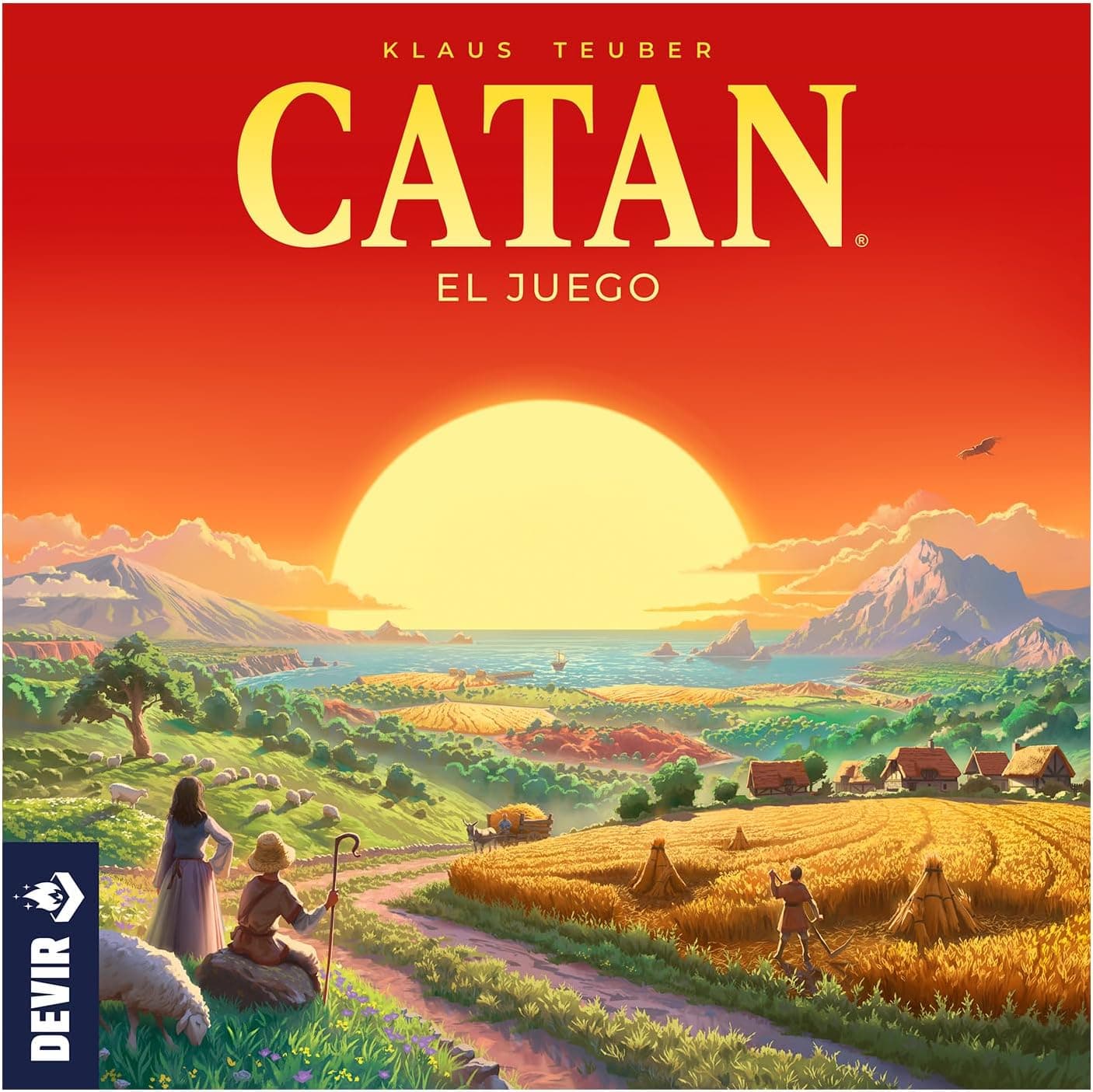
1. Catan
What is it? Catan is probably the game that has done the most to bring modern board games to the general public in recent decades. It's a construction and resource management game where each player is a settler trying to develop their settlement on the island of Catan. You build roads, towns and cities, trade resources with other players and compete to be first to reach 10 victory points.
Why does it work so well for families? Because it combines very different elements that hook different types of players. Children enjoy visible construction on the board (you place little houses and roads that keep growing), direct trading with other players ("I'll give you two sheep for one wheat, please") and the dice luck component that makes each turn unpredictable. Adults, on the other hand, value strategic depth: decisions about where to place your initial settlements are crucial and determine the whole game, reading which resources will be most valuable according to how the game develops, and managing optimal timing to build each thing.
Also, Catan is one of those games where negotiation is absolutely key. You won't win Catan being a lone wolf who rejects all trades; you need to trade with others to get missing resources. This generates hilarious and very natural family moments: "Will you give me wood? Come on, please, look I'll help you later against dad who's winning...", "Okay, but only if you promise not to block this road", "No one wants to give me clay! Conspiracy!". Temporary alliances, pacts that break and friendly betrayals are part of the game's charm.
What some may like least is that dice luck can be frustrating. If your numbers don't come out for several rounds, it can be desperate to see how others advance while you don't get resources. But this very thing has its positive side: a child who's losing can suddenly have a lucky streak and come back, which keeps hope alive until the end.
For whom: Families with children from 10 years onwards. Although the box indicates 8+, my experience is it works better with 10+ because there's considerable medium-term planning and younger ones can get frustrated if they don't understand why their initial decisions left them without key resources for the whole game.
Duration: 60-90 minutes | Players: 3-4 (expandable to 5-6 with expansion)
2. Carcassonne
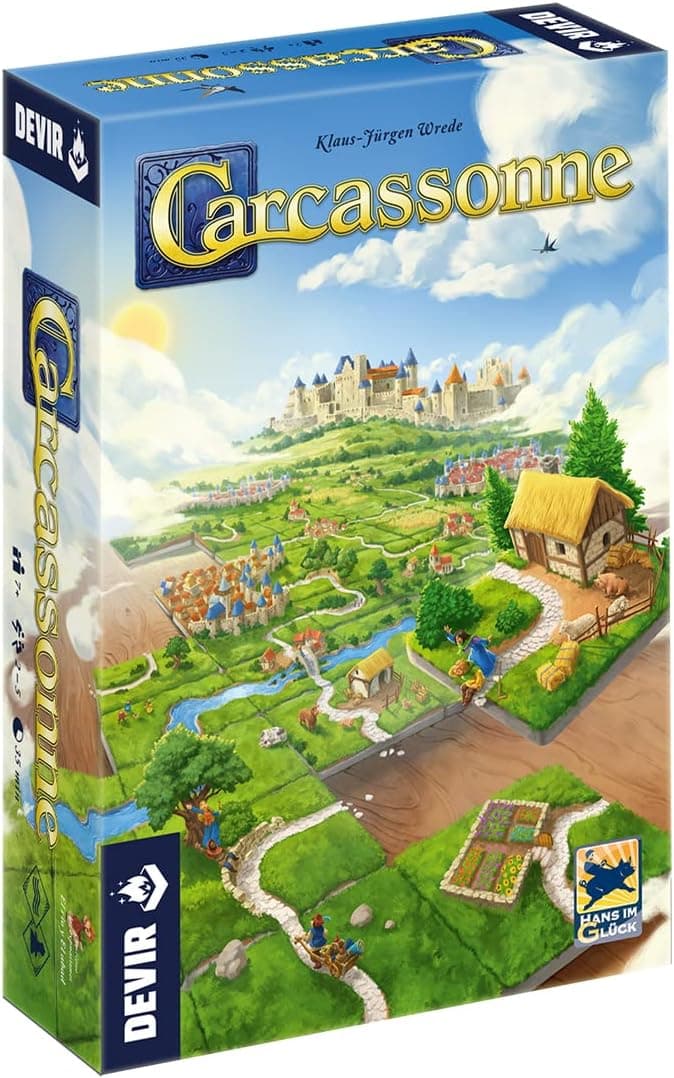
What is it? Carcassonne is a tile-placement game where all players together build a medieval landscape of southern France. On your turn, you take a tile from the pile, place it expanding the common map (it must fit with already placed tiles), and decide if you want to put one of your followers (the famous meeples) on that tile to try to score roads, cities, monasteries or fields.
Why is it perfect for families? Because of its deceptive simplicity. Basic rules are so simple that a 6-7 year old child can play without problems: you take a tile, place it where it fits with the drawing, and if you want you put your little figure. That's it. You can literally explain Carcassonne in three minutes and start playing. But behind that apparent simplicity there are constantly interesting decisions: do I complete my own small city to score quickly or get into the big city another player is building to try to steal points? Do I start a new road I can control alone or compete for that long road where several players are fighting?
What I like most about Carcassonne for family context is that it's a game practically without elimination or aggressive direct attacks. Young children (and many adults too) can get very frustrated in games where "they attack you", "steal your cards" or "destroy what you've built". In Carcassonne competition exists, of course, but it's much more subtle and indirect: you compete to score more, you can complicate someone finishing their structure by strategically placing a tile, but you never destroy what others have built or directly take their resources.
Also, the visual aspect of the game is beautiful. Seeing how little by little, tile by tile, that unique map of castles, winding roads, lonely monasteries and green fields forms has something hypnotic and satisfying. Each game generates a completely different board, like a collaborative puzzle (although then you compete for points). And games are quick: 30-35 minutes normally, which allows playing two or three in a row without problem.
For whom: Really for everyone. It's the game I'd recommend without hesitation to any family starting in modern board games and doesn't know where to start. From 6-7 year old children to grandparents, practically everyone can enjoy it. It's the perfect gateway game.
Duration: 30-45 minutes | Players: 2-5 (ideal with 3-4)
3. Ticket to Ride: Europe
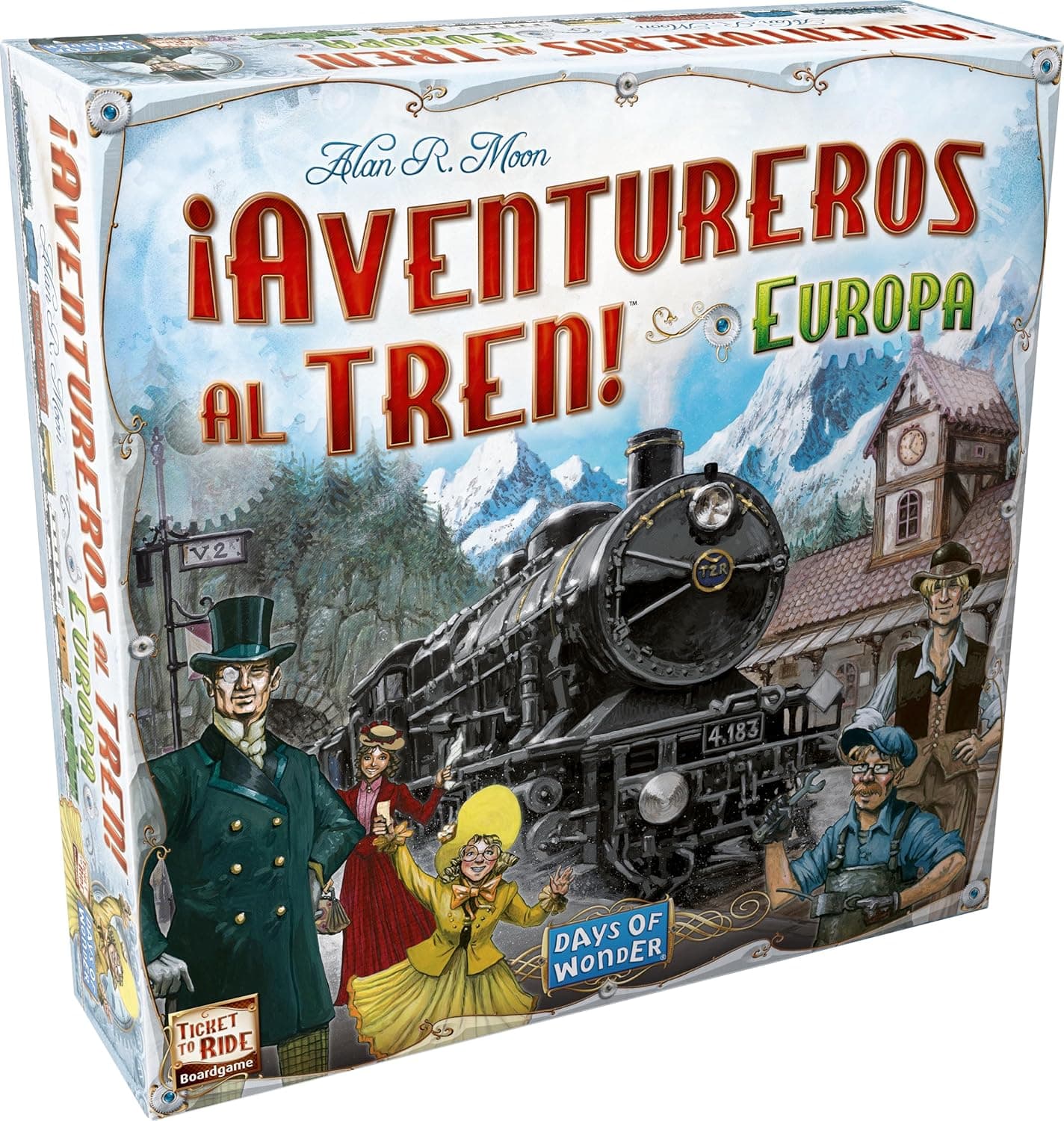
What is it? A game of collecting train cards and building railway routes across the map of Europe. At the start you receive secret destination cards asking you to connect specific cities (for example, "connect Stockholm to Athens" for 21 points, or "connect Amsterdam to Pamplona" for 7 points). Your goal is to fulfill as many of these destinations as possible, and for this you claim train routes on the map by placing your colored wagons.
Why is it so engaging? Ticket to Ride has that magical quality of being tremendously easy to explain but offering interesting decisions every turn. The actions you can do on your turn are only three: take train cards (to accumulate colors), claim a route on the map (spending your cards), or take new destination cards (to try to earn more points). There aren't fifteen possible actions that generate analysis paralysis; there are three super clear options that even an 8-year-old child understands perfectly.
But within that simplicity of actions, interesting tactical decisions constantly emerge: do I go directly to complete my long 21-point route or first secure short routes? Do I risk waiting one more turn to get exactly the cards I need, or do I claim this route now before another player takes it? Do I take this new destination card or is it too risky because I might not be able to complete it? The Europe version also adds tunnels (that cost random extra cards) and ferries (that require locomotives) that give a little more variety and excitement than the original American version.
An aspect I love about Ticket to Ride is the educational geographic component, although it sounds like toy box marketing. Children really learn where European cities are, which countries connect with each other, relative distances... all completely naturally while playing. I've seen 10-11 year old children who after playing several games already perfectly located where Budapest, Smyrna or Kiev were on the map. And the game's visual component helps: it's very satisfying to see how your network of colored little trains grows across the map.
For whom: Excellent entry point for families who've never played anything modern. From 8 years works perfectly. And curiously, it's one of the absolute favorites of older people: I've seen 70-80 year old grandparents absolutely hooked on Ticket to Ride. Something about that nostalgic component of trains and the game's calmness works great with all generations.
Duration: 45-60 minutes | Players: 2-5 (ideal with 3-4)
Kingdom Games
Ticket to Ride (Aventureros al Tren)
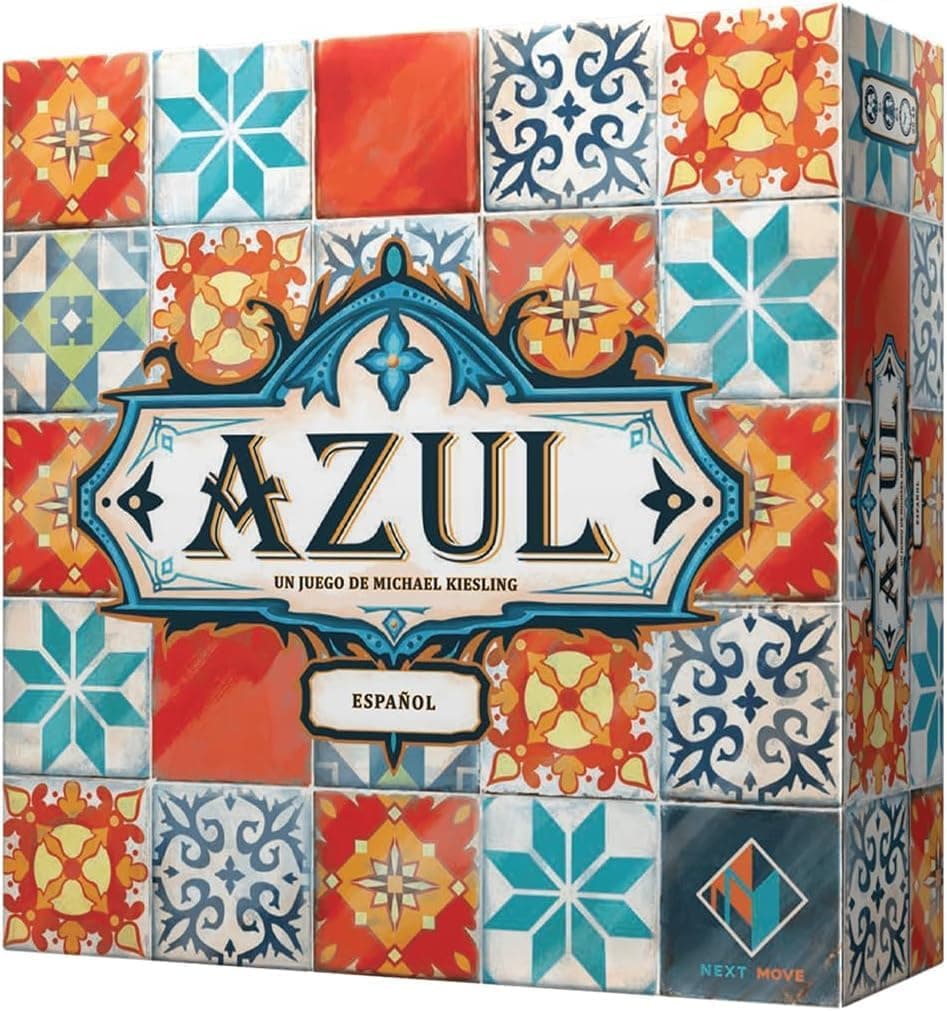
4. Azul
What is it? Azul is an abstract tile-placement game where each player is an artisan decorating the walls of Portugal's royal palace. On your turn, you take tiles from communal dishes (there are 5-7 dishes in the center with 4 tiles each) and place them on your personal board following specific pattern and color rules. Once you complete a row, that tile goes to the decorative wall and you score according to where you place it.
Why does it work so well? First, because it's visually gorgeous. The tiles are resin pieces with bright colors and glossy finish, the board is very well designed with palace illustrations, and simply putting the box on the table already catches attention. Children love the physical and tactile part of taking colored tiles and placing them on their boards. It's a game that "enters through the eyes".
Second, because it perfectly captures that tension of "do I take what I need or mess up the other by taking what they need?". Each time you take tiles from a dish, the rest of that dish's tiles automatically go to the central table, which means your decisions directly affect what options other players will have. It's not an aggressive attack of the "I destroy your castle" type, but there is constant indirect interaction. You can take tiles you don't especially need just so the next player can't use them. And if you go overboard taking tiles you can't place, they subtract points at the end of the round.
And third, because rules are explained in five minutes but decisions have depth. An adult who knows the game well can be optimizing their score thinking two or three turns ahead, calculating which tiles will be available, planning placement combos... while an 8-year-old child can simply try to complete their rows choosing colors they like and enjoy the visual aspect. Both are playing the same game and both enjoy it, although at different depths.
For whom: From 8 years without any problem, even some especially bright 7-year-old could play it. And curiously, it's also one of the few family games that works exceptionally well with only 2 players. Many games on this list need 3-4 to shine, but Azul with 2 is fantastic (in fact, some would say that's when it shines most).
Duration: 30-45 minutes | Players: 2-4
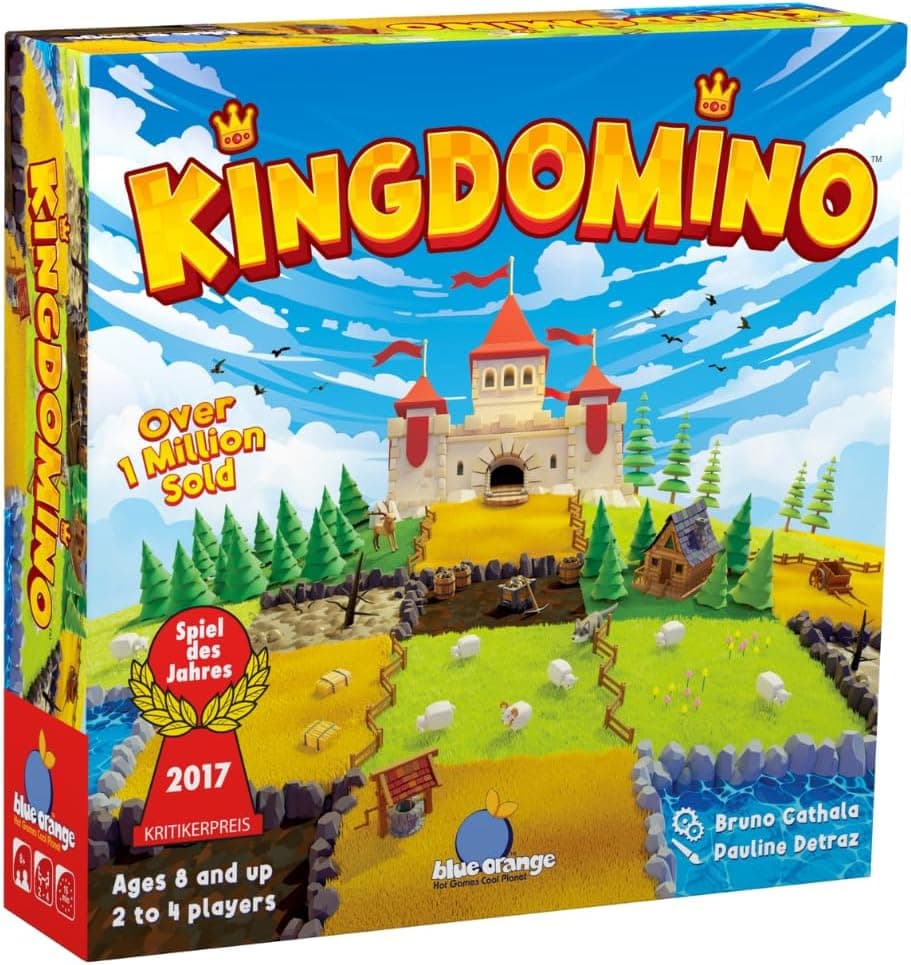
5. Kingdomino
What is it? Kingdomino is basically the classic domino everyone knows, but modernized and turned into a kingdom building game. Each tile is a 2x1 domino showing two types of terrain (forests, lakes, mines, wheat fields, meadows, swamps). Your goal is to build a 5x5 square kingdom where terrains of the same type are grouped together, because that's how they score more. Also, some tiles have crowns that multiply that terrain group's value.
Why does it work with all ages? Because it's literally improved domino, and everyone in Spain knows domino. The entry barrier is minimal: if someone knows how to play domino (match same with same), they already understand 70% of Kingdomino. But it adds interesting layers: you have to build a specific 5x5 square (you can't go outside those limits), you look to group terrains of the same type to multiply their value at the end, and there's a drafting system to choose tiles that adds a little planning.
Games are super fast: 15-20 minutes maximum. This makes it a perfect game for young children who don't yet have the concentration capacity for hour-long games. And since it's so fast, there's always time and desire for "another game". In fact, the normal thing is to play two or three games in a row because when you finish one, you immediately want to try another different strategy.
The game scales very well in complexity: it's simple enough for a 6-7 year old child to play (basically they take tiles that have more crowns and nice terrains), but has enough strategic depth for an adult to enjoy optimizing placement, thinking which tiles to leave available for others, planning their kingdom's shape... Plus, if after a few games you feel you've mastered it, there's "Queendomino", a slightly more complex version with buildings and more variety.
For whom: From 6 years without any problem. It's probably the ideal game as first modern game for families with young children. If you have a 6-8 year old child and want to initiate them in games beyond Parcheesi, Kingdomino is your option.
Duration: 15-20 minutes | Players: 2-4
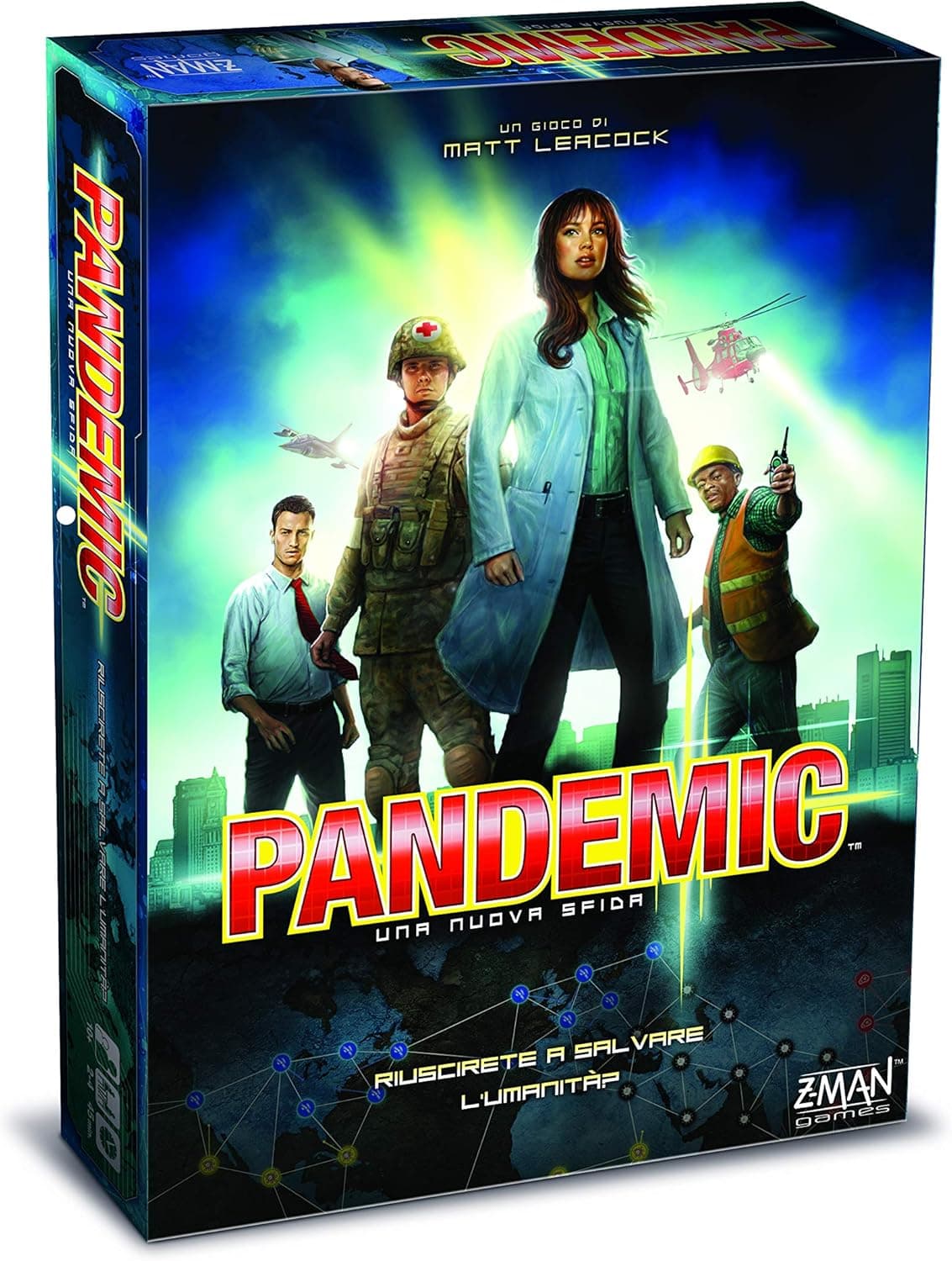
6. Pandemic
What is it? Pandemic is the cooperative par excellence. Instead of competing with each other, all players are a team of specialists (doctor, scientist, emergency operator, researcher...) trying to save the world from four deadly diseases spreading across the planet. You travel between cities, cure sick people, build research stations and try to discover the four cures before it's too late and the world collapses.
Why is it a cooperative classic? Because it perfectly captures the tension of working as a team against a winning system. Pandemic has a crisis escalation system that makes you always, always feel like you're losing. Diseases spread faster than you can control, there are outbreaks that cause chain reactions, you need to prioritize brutally because it's impossible to do everything at once. And then, when you finally discover that fourth cure on the penultimate possible turn, when it seemed you were finished, the feeling of shared victory is incredible. You get up from the table celebrating together as if you'd won a championship.
What's special about Pandemic for families is that it's a game where the whole family debates and decides together. "Do I go cure Madrid or go straight to Atlanta to research?" "I can cure Madrid on my next turn, you go to Atlanta" "But if there's another outbreak in the Middle East before I arrive, we're lost..." These strategic conversations are pure gold for family dynamics. Children learn to argue their ideas, listen to other perspectives, understand that sometimes your plan isn't the best and you have to yield, make difficult group decisions where there's no obvious correct answer.
That said, you have to be careful with the "quarterback" phenomenon: that player (usually an adult) who basically dictates to everyone else what to do each turn. This kills the game's fun, especially for children who feel they're not really playing but following orders. It's important that everyone can propose their ideas and they're discussed among all, not that there's a general giving orders.
The world geography educational component is another plus: the board is a world map with major world cities (Atlanta, Madrid, Tokyo, Cairo, Mumbai...), so playing you learn where they're located without realizing.
For whom: From 8-9 years works well, although the first games you'll probably lose. And that's fine, losing is part of learning and in fact defeats in Pandemic are usually exciting ("we almost made it, one more game!"). It's perfect for families who enjoy challenges and teamwork.
Duration: 45-60 minutes | Players: 2-4 (ideal with 3-4)
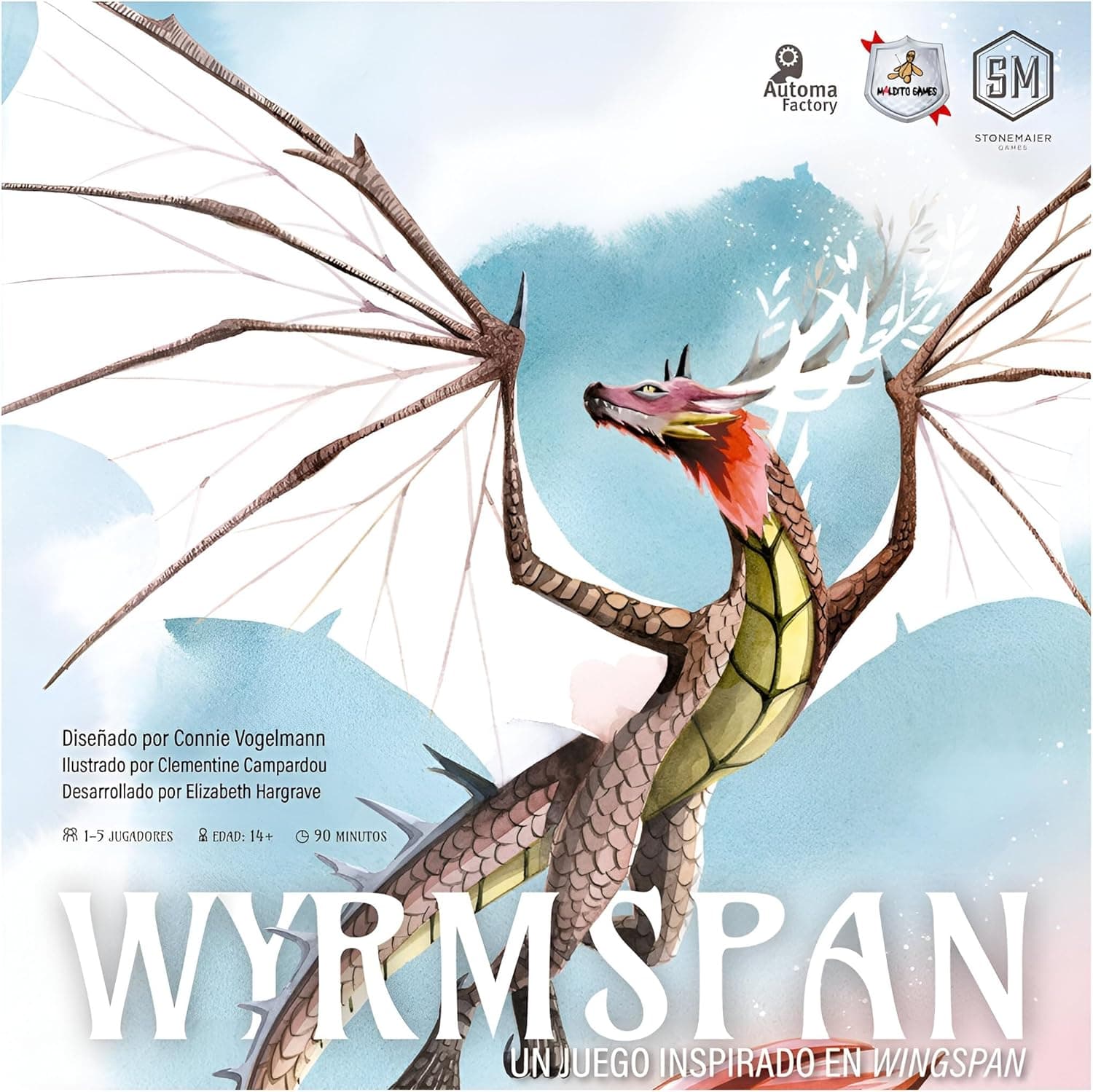
7. Wingspan
What is it? Wingspan is an engine building game where you manage a bird sanctuary in North America. You play bird cards (each with real characteristics: wingspan, habitat, nest type, diet) on your personal board, and these birds give you abilities and resources that allow you to play more birds, creating a virtuous growth circle.
Why does it work for families? Mainly for three reasons. First, because the bird theme attracts a lot, especially children who are in that phase of being interested in animals and nature. Card illustrations are beautiful (each bird is drawn realistically), data is real (wingspan, diet type, habitat), and there's a natural educational component: after playing several games, children know how to differentiate a peregrine falcon from a snowy owl, know which birds migrate and which don't, understand ecosystem concepts...
Second, because although it has more rules than previous games on this list, turn structure is very clear: each round you can do one of four actions (play a bird, get food, lay eggs, or draw bird cards). And each of those actions has its row on your personal board with super clear icons. There aren't a hundred options that paralyze you; there are four well-defined paths.
And third, because competition is very indirect and calm. There are no attacks between players, no elimination, no "I mess you up directly". Everyone builds their bird sanctuary on their board, trying to create efficient combinations. Obviously you compete for common objectives and bird cards everyone wants, but never aggressively. This makes it ideal for families where there are more sensitive children or where you simply prefer a relaxed atmosphere.
The game's tactile aspect is fantastic: there's a dice tower shaped like a bird feeder where you put wooden dice and they come out randomly, there are colored plastic eggs you place on your cards, the cards themselves have a beautiful finish... It's a game that's nice to handle.
For whom: From 10 years works well. Requires a bit more planning capacity than previous ones (you're building an engine that will bear fruit in 2-3 turns), but the theme helps children get hooked a lot. Works perfectly from 2 to 5 players.
Duration: 40-70 minutes (first games longer, then more fluid) | Players: 2-5
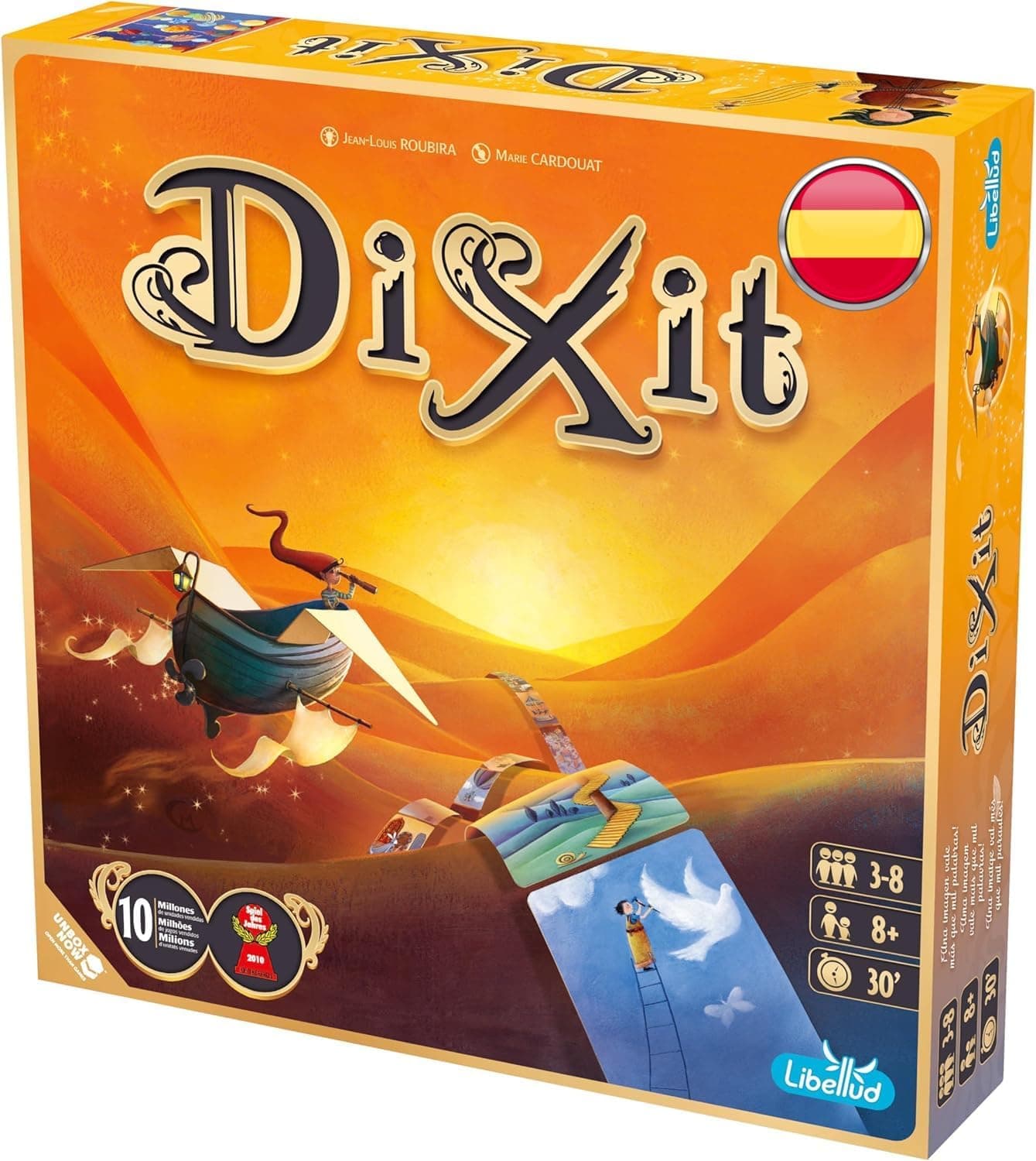
8. Dixit
What is it? Dixit is pure imagination and creativity. Each player has a hand of cards with surrealistic, dreamlike and beautiful illustrations. On your turn as narrator, you secretly choose a card from your hand, give a clue about it (can be a word, phrase, song, sound, mime, whatever you want), and other players must put face down a card from their own hand that could also fit that clue. Then all cards are revealed mixed and each player votes which they think is the narrator's.
Why is it magical in families? Because there are no right or wrong answers, only interpretations. The same illustration can evoke "loneliness" for one person, "freedom" for another, remind someone of a specific movie, or bring back a childhood memory. Clues can be from very obvious ("it's a red animal") to super abstract and personal ("that afternoon at the park when I was 7 years old"). There are no limits to creativity.
What's special about Dixit is that it generates conversations and family connection moments that other games don't achieve. When someone gives a weird clue and then explains why that illustration made them think of that, you discover ways of thinking of your family members you didn't know. "This image reminded you of when we were little and dad took us to the beach? I would never have seen it that way!" "For me this card is sadness, but for you it's hope... interesting". These are conversations that go beyond the game.
Also, it's a game without aggressive winners or frustrated losers. Even if you're last in points, you keep enjoying the beautiful images, crazy clues people give, unexpected interpretations, laughs when someone votes for a completely wrong card... Scoring almost becomes secondary to the enjoyment of sharing interpretations.
An important detail of the scoring system (that many people misinterpret): if EVERYONE guesses your card, you don't score. And if NO ONE guesses, you don't either. You only score if some guess and others don't. This forces clues to be balanced: not so obvious everyone guesses, not so cryptic no one understands. It's a brilliant design that balances the game automatically.
For whom: Families with children from 6-7 years, although at first they'll need help thinking of creative clues. Younger ones tend to give very literal clues ("it's a rabbit") and little by little learn to be more abstract. Works especially well with groups of 5-6 people (maximum is 8, but with many players it gets quite long).
Duration: 30-40 minutes | Players: 3-8 (ideal 5-6)
9. 7 Wonders Duel
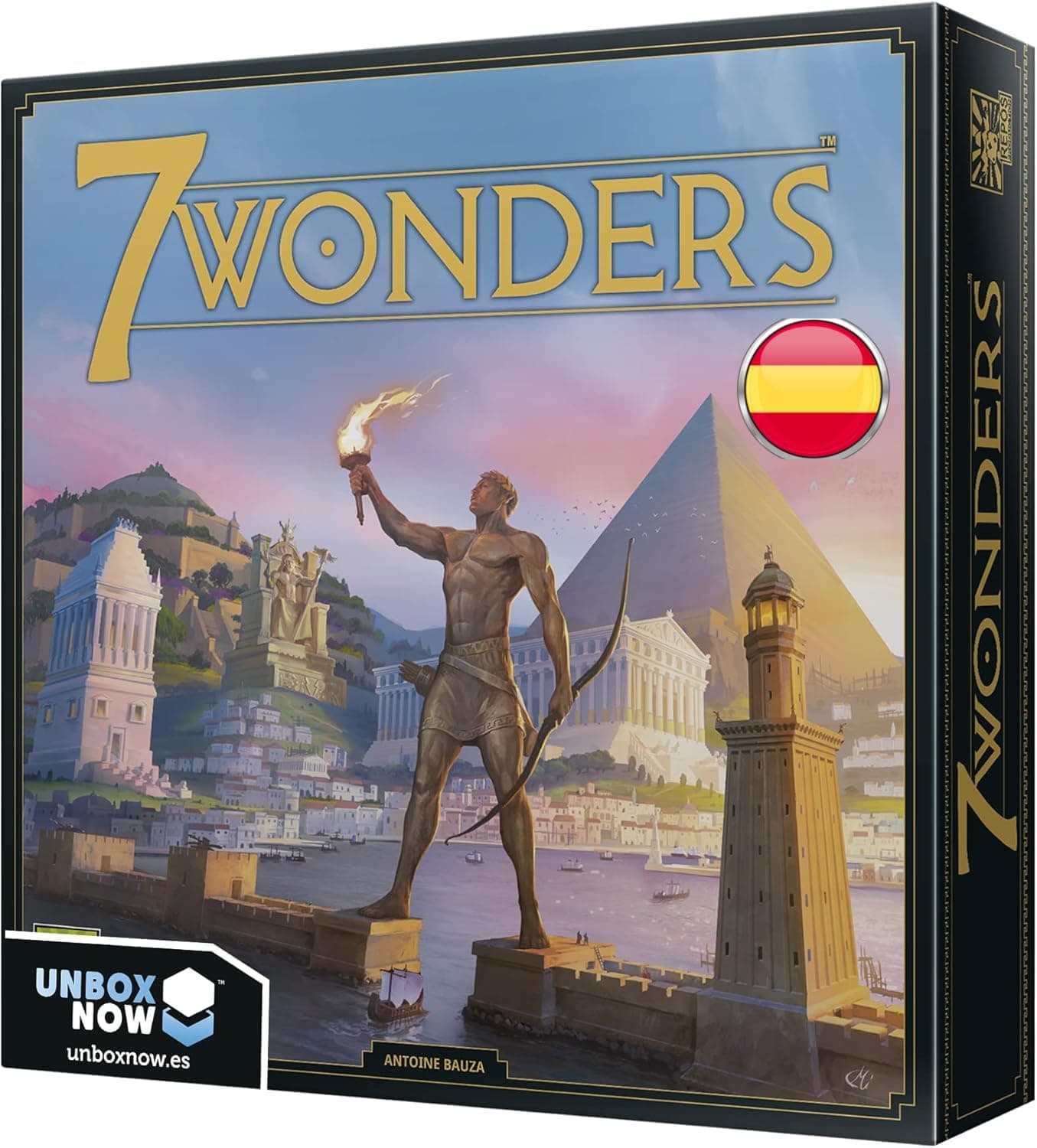
What is it? 7 Wonders Duel is a card drafting and civilization building game specifically designed for two players. Each player builds their civilization through three ages (Ancient Age, Middle Ages, Modern Age) choosing cards from a central pyramid that gradually reveals. Cards represent different types of buildings: commercial (give resources), military (advance on conflict track), scientific (give scientific symbols), or civic (give victory points).
Why is it perfect for couples or father/mother-child? Because it's designed from scratch for 2 players, it's not a badly adapted multiplayer game. Each decision you make directly affects your opponent: if you take a card, you leave others available; if you build military, you force the other to respond; if you go for science, you create pressure because they can instantly win if they get 6 different scientific symbols.
There are three ways to win, which creates constant tension: military victory (if you advance a lot on the conflict track), scientific victory (if you get 6 different scientific symbols), or victory by points at the end of the third age. This means you always have to be watching what the other is doing. Going for science? I have to try to take scientific cards to block them. Advancing in military? I need to build something to not lose automatically.
The game has enough depth to maintain interest through many games. Cards appearing in each age are partially random, wonders you build are different each time, and viable strategies are multiple (you can win focusing on trade and points, or going aggressively for science, or building military to pressure...). There's no dominant strategy.
That said, it has more rules than previous games on this list. The first game you'll need the manual nearby to consult icons and doubts. But from the second or third it flows naturally.
For whom: Couples, or a father/mother with a child from 10-11 years. Requires medium-term planning capacity and reading opponent's strategy. It's not the game to initiate someone in modern games, but if you've already played some from this list and like them, 7 Wonders Duel will love you.
Duration: 25-40 minutes | Players: 2 (exclusively)
10. Root
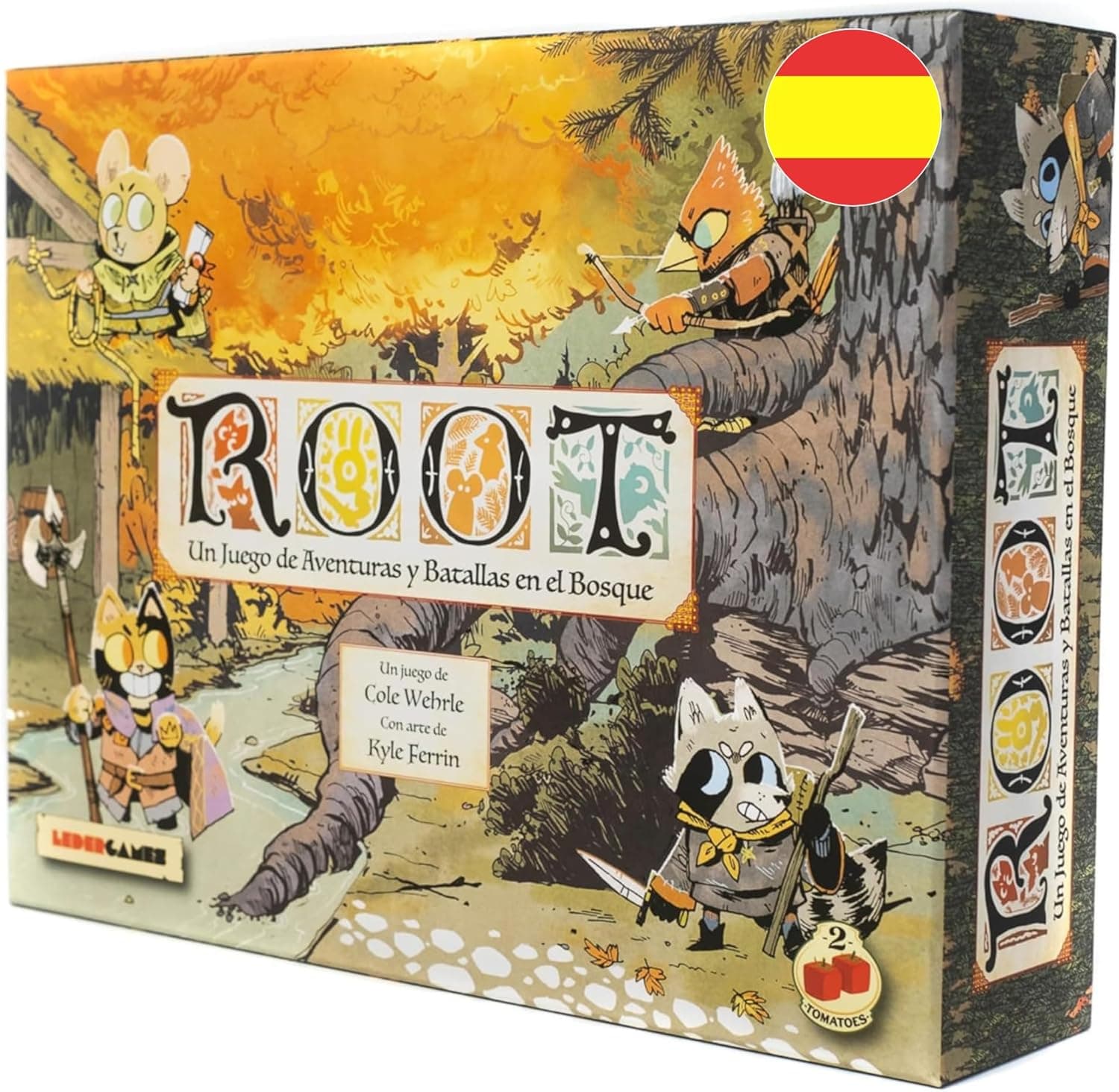
What is it? Root is an asymmetric area control and strategy game where each faction has completely different mechanics. You're in a forest where different animal factions fight for control: the Marquise of Cats (an organized army controlling territories), the Eyrie (aristocratic birds planning their actions ahead), the Woodland Alliance (rebel guerrillas), the Vagabond (solitary adventurer)... Each faction plays radically differently.
Why do I include it in a family list being more complex? Because it's perfect for families with older children (12+) who already have experience with board games and seek something with more depth. It's not a game for absolute beginners, but if you've already played several of the previous titles and want to level up, Root offers an incredible experience.
What's special is the total asymmetry. You're not all doing the same thing with small variations; each faction has different rules, earns points in different ways, has completely different strategies. Cats build buildings and control territories. Eyrie plan decrees they must fulfill. Alliance is an insurgent army that starts weak but grows in power. Vagabond does missions and helps/hinders others. This means each family member can choose a faction that fits their play style.
The negotiation and diplomacy component is brutal. You need to make temporary alliances, convince others to attack the leader instead of you, offer non-aggression pacts... The conversations that emerge are fantastic: "If you leave me alone this turn, I won't attack your buildings next one", "We all have to stop the Cats or they win". It's a game that generates memorable moments.
Illustrations are beautiful (all art is storybook style with animals), wooden components are quality, and replayability is very high because you can try different factions and each plays differently.
For whom: Families with players from 12-13 years who already have experience with modern games. Not to initiate anyone, but if you seek the next level of strategic depth while maintaining a family atmosphere (it's not a dense wargame), Root is fantastic.
Duration: 60-90 minutes | Players: 2-4 (ideal with 3-4)
How to Choose the Perfect Game for Your Family
Now that you know the 10 games, maybe you wonder: "Okay, but where do I start? Which is best for us?". Here are some practical tips based on my real experience playing with dozens of different families.
According to Your Children's Age
Age is probably the most important factor when choosing.
If you have 6-8 year old children, your best bet is to start with Kingdomino or Carcassonne. These two have the perfect combination of ultra-simple rules, short games and visual components that catch attention. A child of this age can understand basic mechanics in literally three minutes and start playing immediately without feeling lost or overwhelmed. Kingdomino is especially good because games last only 15 minutes, perfect to maintain young children's attention.
Dixit also works from this age, although younger ones will need help thinking of creative clues (they'll tend to be very literal: "it's a cat", "it's blue"). But the game's visual aspect they love and little by little they learn to be more creative with clues.
With 8-10 year old children, you can already introduce practically any from the list except Root. Ticket to Ride, Azul and Pandemic are especially indicated for this age. At 8-10 years they already handle planning better ("if I do this now, then I can do that") and enjoy the competitive component without getting excessively frustrated when they lose. Ticket to Ride in particular is pure magic at this age: they understand perfectly the concept of connecting cities, accumulate cards to claim routes, and fulfill destination cards. Plus the geography component helps a lot: they learn European cities while playing.
From 10 years onwards you can introduce heavier games like Catan, Wingspan or 7 Wonders Duel. At 10-12 years children already have the emotional maturity to handle medium-long term strategic planning, understand that sometimes you lose and it's part of learning, and enjoy more complex mechanics. Catan's negotiation at this age is especially fun: they learn to trade, make alliances, detect when someone's bluffing...
For teenagers 12+, Root will fascinate them. The asymmetry, strategic depth, negotiation and diplomacy are perfect for that age where they seek more challenging and less "childish" experiences. It's the game that shows them board games can be as deep and interesting as any video game.
According to Available Time
Weekday evenings (20-30 min): Kingdomino is perfect. Super fast, fun, no problem if you have to stop abruptly because it's bedtime.
Weekend afternoons with no rush: Carcassonne, Azul, Dixit or Pandemic are ideal. 30-50 minutes that fly by.
Full Sunday afternoon: Catan, Ticket to Ride, Wingspan or Root. Here yes, dedicate 60-90 minutes and enjoy without rush.
According to Usual Number of Players
If you're 2 people (couple, father/mother with one child): Best investment is 7 Wonders Duel. Designed specifically for 2 and it's fantastic. Also work great with 2: Azul (arguably better with 2 than with more), Carcassonne, Wingspan, Pandemic (although with 2 is harder).
Family of 3-4 (most common): You're in luck - it's the ideal number for practically all these games. Any from the list will work wonderfully. If I had to choose one: Ticket to Ride or Carcassonne as entry point, Pandemic if you want cooperation, Catan if you want more strategic depth.
5-6 or more: Dixit is fantastic (accepts up to 8). Catan needs the expansion for 5-6 but works great. Ticket to Ride handles 5 well. Pandemic with 4 is better than with 5 (with many players downtime increases).
Frequently Asked Questions
What's the best game to start if we've never played modern games?
Ticket to Ride: Europe is my number one recommendation. Perfect combination of being ultra-easy to explain (5 minutes), visually attractive (colored trains on a map), thematically appealing (trains and European cities), and with enough depth not to get bored after the first game. It's literally the game I give as a gift to families starting in this world.
If you want something even simpler and faster: Kingdomino. In 15 minutes you've already played a complete game and understood if you like it or not.
Do these games work well with only 2 players?
Depends greatly on the game. Work excellently with 2:
- 7 Wonders Duel (designed for 2, doesn't work with more)
- Azul (arguably its best player count)
- Carcassonne (very good with 2)
- Wingspan (works from 1-5, with 2 is great)
Don't work with 2:
- Dixit (impossible with 2, needs at least 3)
- Catan (very limited with 2, designed for 3-4)
Work but aren't ideal:
- Pandemic, Ticket to Ride work with 2 but shine more with 3-4
Are these games expensive?
Prices usually between €25-50:
- Kingdomino, Dixit, Azul: €25-35
- Carcassonne, Ticket to Ride, Pandemic, 7 Wonders Duel: €30-40
- Catan: €35-45
- Wingspan, Root: €50-60 (the most expensive but justified by quality components)
Yes, more expensive than buying an €8 Parcheesi at the supermarket. But the quality difference is abysmal. These games will give you hundreds of hours of family entertainment. Calculate cost per entertainment hour and you'll see it's ridiculously low. A €40 game that you play 50 times comes out to €0.80 per game session - cheaper than any other form of family entertainment.
Where can I buy these games?
- Specialized game stores: (my favorite - you get advice): Zacatrus, Más Que Oca, Jugamos Todos, Dungeon Marvels, or your local neighborhood store
- Amazon and large online retailers: They usually have them all with competitive prices and fast shipping
- Large toy and entertainment stores: FNAC, El Corte Inglés, Carrefour (limited selection but the most popular)
- Second hand: Wallapop, Milanuncios (can find good deals, although modern games hold their value well)
My recommendation: if it's your first game, go to a specialized store. The staff knows the games, can recommend according to your family, explain rules basics, and usually have demo copies to see components.
Do I need to learn complicated rules and read 30-page manuals?
Not at all! All these games have 4-12 page maximum manuals with clear explanations and many examples. And most important: tons of YouTube videos explaining "how to play X" in 10-15 minutes.
My advice: watch a YouTube video before playing. Seeing someone explain rules while showing components makes everything much clearer than reading the manual cold. Then have the manual nearby for specific doubts during the first game.
Kingdomino, Carcassonne, Azul or Ticket to Ride can literally be explained in 5 minutes. An adult can read the rules in 15 minutes and teach the family immediately.
The more complex ones (Catan, Wingspan, Root) yes need a bit more investment, but nothing excessive. An hour reading rules and watching a video, and you're ready.
If I can only buy one, which should I choose?
Difficult question because depends on your family, but here's my recommendation:
For maximum versatility and safety: Ticket to Ride: Europe. Works from 8 to 80 years, with 2-5 players, it's easy to learn, games last 45-60 minutes (neither too short nor eternal), has replay value, and practically never fails. It's the safest.
If you have young children (6-8 years): Kingdomino. Short, simple, visual, perfect as entry point.
If you want cooperation instead of competition: Pandemic. Best cooperative family on the market.
If you're only 2 people most of the time: 7 Wonders Duel without hesitation.
If you want strategic depth and accept longer games: Catan. It's a classic for a reason.
Note: This article contains affiliate links. If you purchase through these links, we could receive a small commission at no additional cost to you.
Do you like my content?
Buy me a coffee to support my work