The 8 Best Creative and Imaginative Board Games (2025): Unleash Your Artistic Side
Discover the best board games for creative minds in 2025. Complete guide: Dixit, Wingspan, Concept, Just One, The Mind, Obscurio, Imagine and Detective Club. Perfect for developing creativity, communication and imagination while having fun.
The 8 Best Creative and Imaginative Board Games (2025): Unleash Your Artistic Side
There exists a special type of pleasure that you only experience when your mind frees itself from logical restrictions and can wander freely through territories of pure creativity and imagination. It's not the satisfaction of solving a mathematical puzzle nor the adrenaline of winning by quick reflexes. It's something different: that magical moment where an abstract idea in your head is transmitted to other people in unexpected ways, where an illustration evokes a thousand different interpretations, where you all collaborate to connect mentally without words, or where your visual creativity becomes the bridge between your team's success and failure.
Creative and imaginative board games represent a unique category in the gaming world. The winner isn't who calculates best nor who has the most luck with dice. Here whoever thinks laterally triumphs, whoever dares to make unusual connections, whoever communicates in unconventional ways. These are games that develop crucial soft skills in real life: empathy (understanding how others think), creative communication (transmitting complex ideas simply), divergent thinking (generating multiple solutions) and abstraction capacity.
In this article I bring you a careful selection of 8 games that celebrate creativity, imagination and communication in innovative ways. From the iconic Dixit with its dreamlike illustrations to the minimalist The Mind where you connect telepathically, passing through the cooperative Just One or the competitive Detective Club with its creative social deduction. These are games that make you think differently, generate fascinating conversations and, by the way, develop your most artistic and creative side almost without you realizing.
Why Creative Games Are Special
Before diving into the list, it's worth reflecting on what makes games prioritizing creativity and imagination unique, and why they represent a different experience from other types of board games.
They develop emotional and social intelligence. Creative games constantly force you to put yourself in other players' minds. When you give a clue in Dixit, you don't just think about the image, but about how your brother, mother or friend will interpret it. What cultural references do they share with you? What associations will they make? This ability to model others' minds is a fundamental social skill that creative games train naturally and entertainingly.
There are no absolute "correct" answers. Unlike pure strategy games where one move is objectively better than another, in creative games everything is interpretation and perspective. The same image can evoke "loneliness" for one person, "freedom" for another and "adventure" for a third. All are valid. This aspect makes these games incredibly inclusive: your education level, age or previous game experience doesn't matter. Your unique perspective is your strength.
They reveal how each person thinks. There's something fascinating about discovering the mental connections your friends or family make. "For you this image represents childhood? Interesting, I see it as melancholy for past times." "Would you use 'transparent' as a clue for 'water'? I never would have imagined." These games generate post-game conversations where everyone shares why they thought what they thought, and those chats are often more valuable than the game itself.
They exercise lateral thinking. While strategy games ask you to think vertically (deepen in a logical line), creative ones push you to lateral thinking: finding unexpected connections, jumping from one concept to another apparently unrelated, seeing patterns where others don't. This ability to "think outside the box" is perhaps the most valuable skill in the modern world where problems rarely have obvious solutions.
They generate memorable moments for unique reasons. In a strategy game, you remember that brilliant move that gave you victory. In a reflex one, you remember that epic moment grabbing the totem. In creative ones, you remember more subtle but equally powerful moments: that perfect clue your partner understood instantly because it connected with a shared experience; that moment of sudden understanding when you got your friend's twisted logic; that round where everyone mentally synchronized almost magically.
How We Selected These Games
For this list I applied specific criteria that ensure these games really develop and celebrate creativity:
Creativity as central mechanic, not peripheral. These aren't strategy games with an optional "creative component". Creativity, imagination or unconventional communication are the very heart of the mechanics. You can't win without thinking creatively.
Accessible for non-artists. None of these games require you to know how to draw well, write poetry or have previous artistic knowledge. The creativity they ask for is mental and communicative, not technical. Anyone can enjoy them regardless of their artistic abilities.
They balance competition and collaboration. Some are pure cooperative, others competitive, but all foster connection moments between players. Even in competitive ones, there are more shared laughs and "that was brilliant!" moments than frustrations.
High replayability by organic design. It's not just having many different cards (although that helps), but variability emerges from player interaction. The same cards with different people generate completely different experiences.
Tested with diverse players. All these titles I've seen working with very varied groups: from hardcore players to people who never touch board games, from teenagers to 70-year-olds, from families to friend groups. Their versatility is key.
Now yes, let's go with the 8 games that best embody creativity, imagination and communication in gaming format.
The 8 Best Creative and Imaginative Games
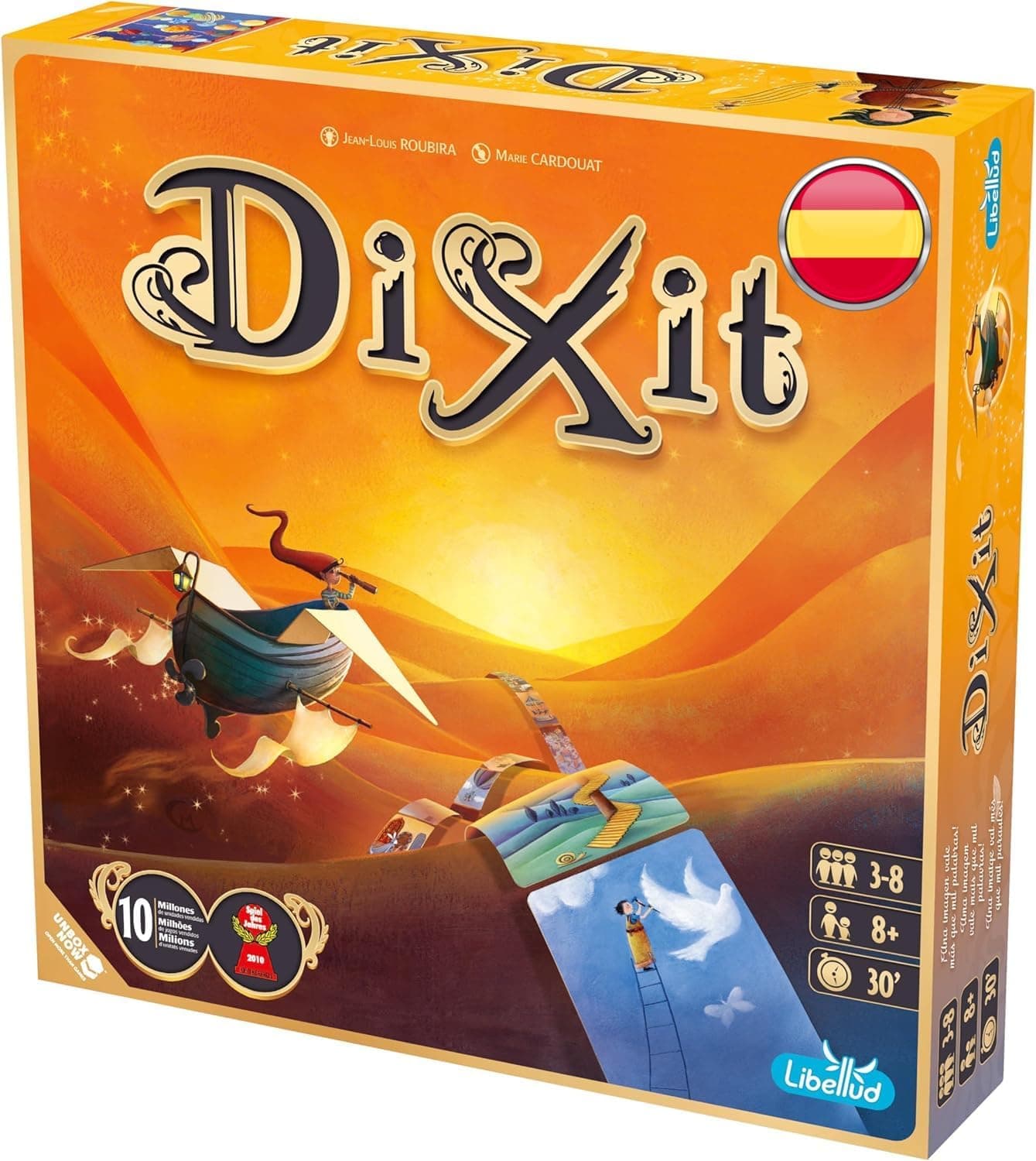
1. Dixit
What is it? Dixit is the creative game par excellence. Each player has cards with absolutely beautiful surrealistic and dreamlike illustrations. On your turn as narrator, you secretly choose a card, give a clue about it (word, phrase, song, sound, whatever you want), and others put a card from their hand that could also fit. All cards are revealed mixed and each player votes which they think is the narrator's. You score if some (not all) guess.
Why is it the king of creative games? Because there are no limits to your clues' creativity. You can be literal ("a red cat"), abstract ("loneliness in the crowd"), musical (hum a song), cinematic ("the final scene of Blade Runner"), autobiographical ("that afternoon at the beach when I was 8 years old")... Everything goes. And each type of clue reveals something about how you think, what cultural references move you, what experiences marked you.
The scoring system's genius is what elevates Dixit: if everyone guesses your card, you don't score (too obvious clue). If no one guesses, neither (too cryptic). You only score if some guess and others don't. This forces you to perfectly calibrate your clue: clear enough for at least one person to understand you, but subtle enough not to be trivial. It's a constant exercise in empathy and theory of mind.
Marie Cardouat's illustrations are artworks that would deserve to be in a gallery. Each card is a window to a dreamlike world: impossible creatures, surrealistic landscapes, transformed objects, scenes mixing reality and fantasy... I've seen people buying Dixit just for how beautiful the cards are, as if they were artistic postcards. And variety is immense: between base game and multiple expansions, there are hundreds of different cards.
What I love most about Dixit is how it generates post-clue conversations. When someone gives a weird clue and then explains their reasoning, you discover aspects of that person you didn't know. "This image reminded you of your grandmother because she had a similar clock... I didn't know." "For me it represents hope because..." These windows into others' minds and experiences create real connections beyond the game.
An important detail: with new players, first rounds tend to be very literal ("it's blue", "there's a tree"). But after 3-4 rounds, when people understand that interesting clues are abstract or personal ones, the game completely transforms and reaches its true potential.
For whom: Literally anyone from 8 years (even 6-7 with help) to 99. Works spectacularly well in mixed family contexts where several generations coexist. It's the game I'd recommend without hesitation to develop creativity and empathy. Ideal with 4-6 players, although works from 3 to 8.
Duration: 30-40 minutes | Players: 3-8 (ideal 4-6)
2. Wingspan
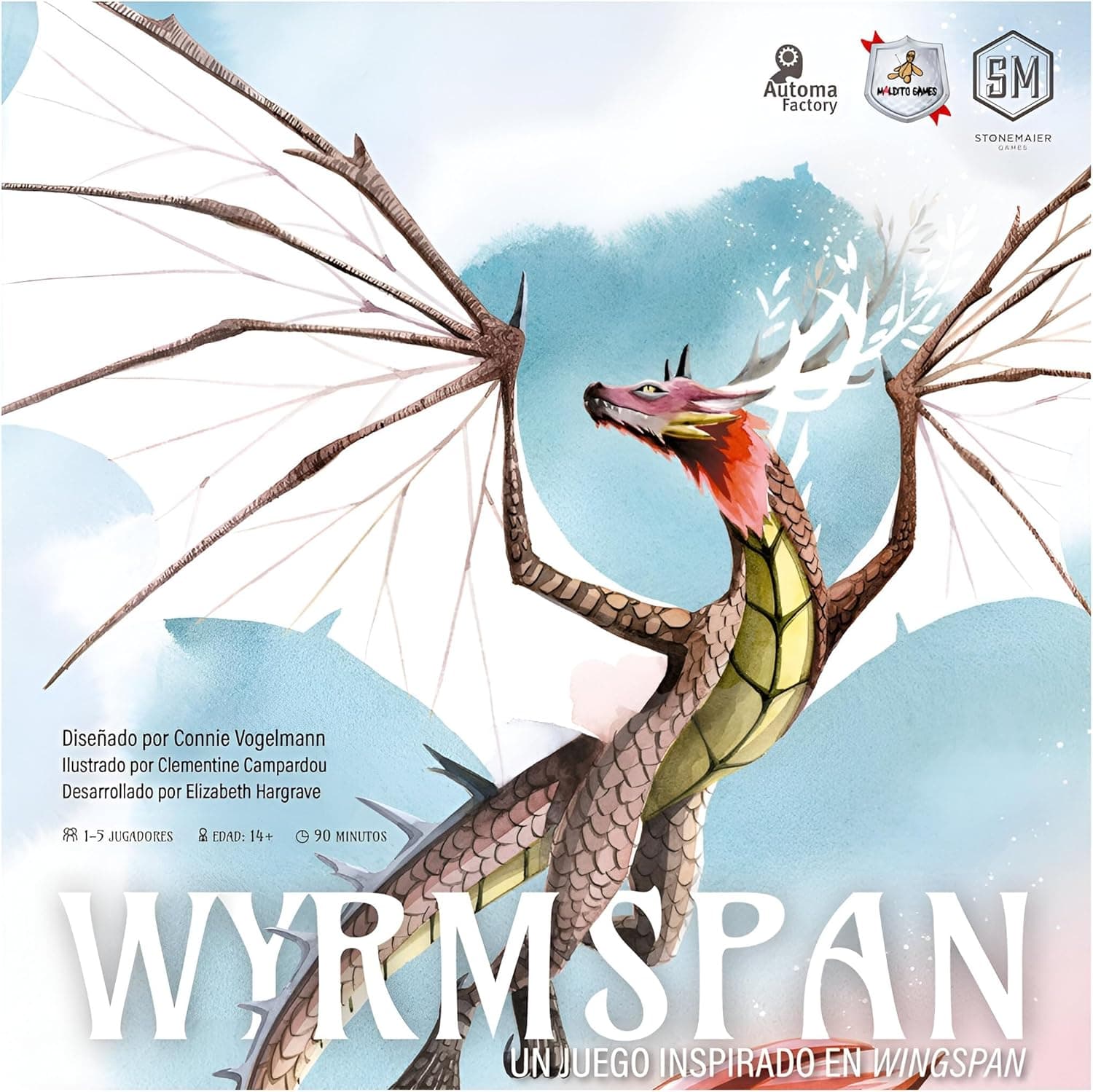
What is it? Wingspan is an engine building game where you manage a North American bird sanctuary. You play bird cards (with real data: wingspan, habitat, diet, nesting) that give you abilities and resources to play more birds, creating a virtuous growth circle. You compete for objectives, complete bonus cards and accumulate points.
Why is it on a creative games list? Because although Wingspan has strategic engine-building elements, its creative component is in the emergent narrative construction of your sanctuary. You're not just optimizing an abstract engine; you're creating a unique ecosystem of birds interacting with each other in thematically and narratively coherent ways.
When you play a peregrine falcon that lets you "hunt" (take food from the reserve), it's not just a mechanic; it's a story. When your migratory birds give you eggs at the end of each round, you're seeing the natural reproduction cycle. When you build a sanctuary specialized in forest birds that feed on invertebrates, you're creating a coherent biome. This emergent narrative you creatively build is what distinguishes Wingspan from other more abstract engine-builders.
Card illustrations are absolutely magnificent, each bird drawn with scientific precision but also artistic warmth. They're not clinical photos; they're portraits capturing each species' personality. And data is real: exact wingspans, verified diets, correct habitats, precisely described nests. Playing Wingspan you're learning ornithology without realizing, and that has a fascinating educational-creative component.
The tactile aspect is marvelous: a dice tower shaped like a bird feeder, colored plastic eggs you place on cards, the egg shaker... Everything is designed with care and adds a sensory dimension that enhances thematic immersion. When you place eggs on your swallow tree, you really feel you're caring for birds.
Competition is indirect and civilized, without direct attacks. Each player builds their sanctuary on their personal board, competing for common objectives but without destroying what others have created. This makes it perfect for groups enjoying more contemplative and less conflictive experiences.
For whom: Players from 10-11 years who enjoy both strategy and narrative and aesthetics. It's especially popular among people who value beautiful design, natural themes, and more relaxed and contemplative game experiences. Perfect for 2-5 players, works very well even solo.
Duration: 40-70 minutes (first games longer, then more fluid) | Players: 1-5
3. Concept
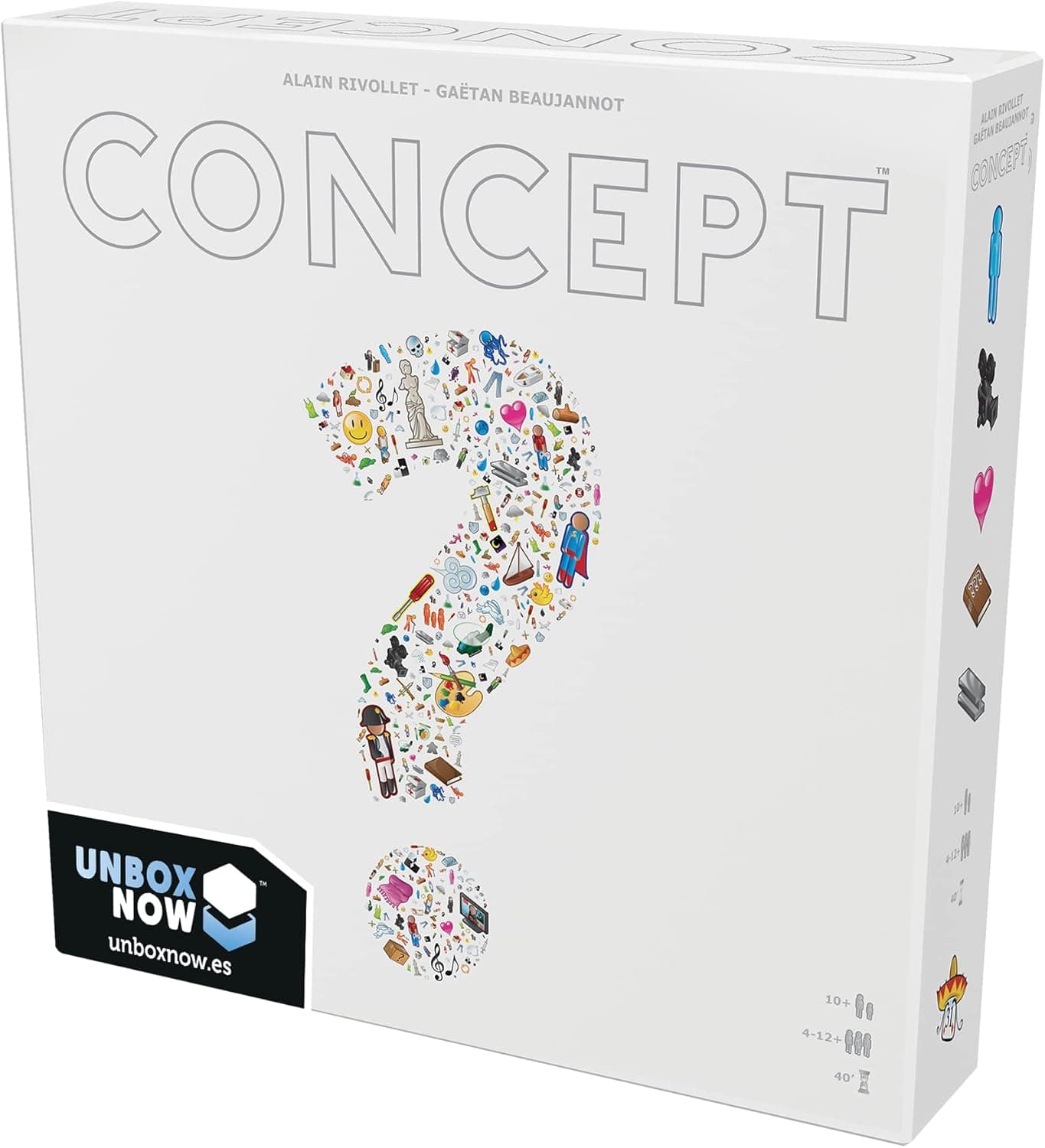
What is it? Concept is a guessing game where you must make others guess words or phrases using only visual icons on a board. Without talking, without gestures, only placing colored cubes on board icons representing concepts (colors, shapes, sizes, categories, actions, places, sensations...). It's like playing charades but with a universal visual language.
Why does it develop creativity? Because it forces you to decompose complex concepts into their abstract visual components. How do you explain "Harry Potter" using only icons? Maybe: human + young + glasses + magic + lightning + England. And "roller coaster"? Maybe: object + big + fast movement + up-down + fun + fear. This conceptual decomposition is a fascinating mental exercise.
What's brilliant is there are infinite ways to represent each concept. Different players will use different icon combinations for the same thing, revealing how they mentally categorize the world. Some are more literal, others more metaphorical. Some use many icons to be precise, others go to minimum essentials. There's no "correct" way, only creative approaches.
The board is magnificently designed with dozens of icons covering practically any imaginable concept: colors, numbers, geometric shapes, nature, animals, body parts, emotions, actions, places, temporality, sizes... Variety is enough to represent from concrete objects to abstract ideas.
A smart mechanic: you use cubes of different colors hierarchically. Blue/green cubes are main concept, transparent ones are sub-concepts or clarifications. This allows structuring your clues with complexity: "It's an animal (main) that flies (sub-concept) and is nocturnal (sub-concept)". Owl, right?
Best thing is it works in cooperative or competitive mode. You can play relaxedly without points, simply enjoying guessing, or compete for points. Personally, best games are cooperative ones where everyone works together to decipher difficult concepts, celebrating when someone finally guesses.
For whom: From 10 years without problem, even younger children can participate with help. Groups of 4-12 players. It's especially good for groups with varied ages or people speaking different languages (icons are universal). Also works great in educational contexts to teach vocabulary or abstract concepts.
Duration: 30-45 minutes | Players: 4-12 (ideal 5-8)
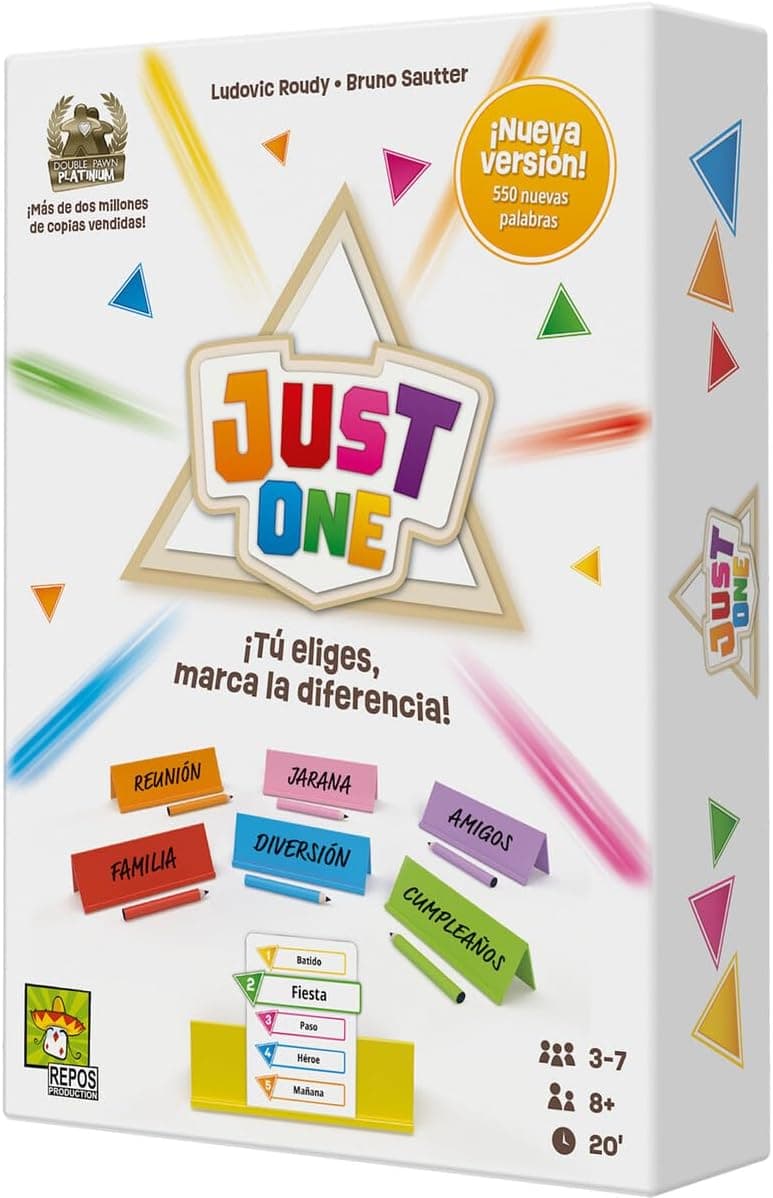
4. Just One
What is it? Just One is a minimalist and elegant cooperative guessing game. One of you is the guesser and must discover a secret word. Others, simultaneously and secretly, write ONE word as a clue on their little boards. But here's the trick: before revealing clues to the guesser, you all show them to each other and duplicate clues are automatically eliminated. The guesser only sees unique clues.
Why is it brilliant? Because of the constant dilemma between being obvious or risky. If the word is "pyramid", you could write "Egypt" (obvious but safe), but probably 2-3 other people think the same and all get eliminated. Do you write "pharaoh"? "triangle"? "sand"? How specific or generic to be? This balance between originality and clarity is what makes each round fascinating.
The game pushes you to think creatively to be original without being cryptic. You need that clue only you would give but that's still clear enough. And since everyone's thinking the same simultaneously, there's a meta-game of "what will others write?" that adds psychological depth.
Best games emerge when the group develops synchrony. After a few rounds, you start knowing each player's style. "María always goes for cultural references", "Pedro thinks in direct synonyms", "Laura makes abstract associations"... This group reading makes duplicate clues reduce and cooperation work better.
The physical format is beautiful: little white boards with markers, cards with words of different difficulties, and a cooperative scoring system where you try to guess maximum words in 13 attempts. It's minimalist but effective.
Won the Spiel des Jahres 2019 (board games Oscar) for good reasons: rules explained in 2 minutes, emerging depth from player interaction, genuine cooperation without "quarterback" problem, and that fantastic feeling when you give a risky clue no one else gave and it turns out perfect for guessing.
For whom: Groups of 3-7 players (works better with 4-5). From teenagers to older adults. It's especially good for groups with different vocabulary levels because words range from simple to complex. Perfect as entry game to cooperatives or to take anywhere (it's very portable).
Duration: 20-30 minutes | Players: 3-7 (ideal 4-5)
5. The Mind
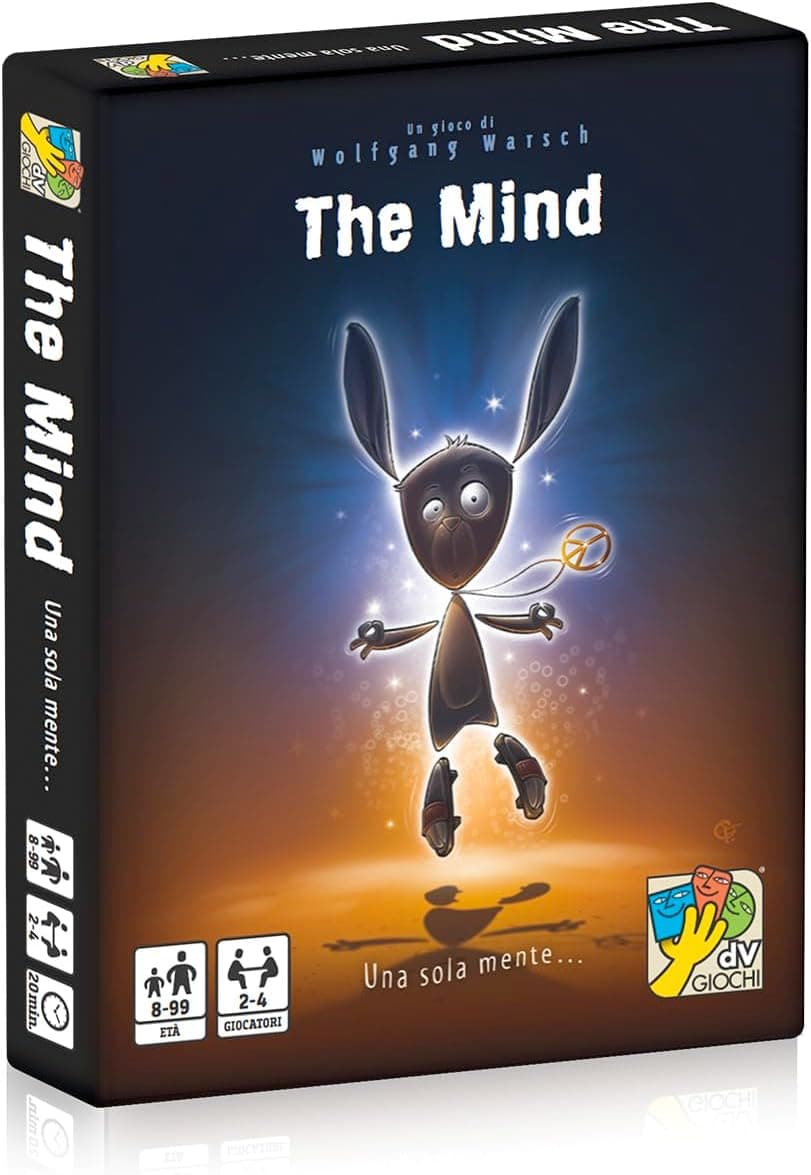
What is it? The Mind is radical cooperative minimalism. Each player receives numbered cards from 1 to 100. You must play them all in ascending order in a central pile. But here's the crazy part: you can't talk, can't make signals, can't communicate in any way. You must only "mentally connect" and feel when it's the moment to play each card. If someone plays a higher card than one another had, you lose a life.
Why is it a unique experience? Because it's not really a game, it's a social experiment in telepathic synchronization. First rounds are chaotic: people playing cards too fast, others waiting forever, timing totally uncoordinated. But something magical starts happening round after round: the group develops a shared rhythm.
It's not real magic, obviously. It's subtle body language, shared timing and micro-expression reading that your brains unconsciously process. You start noticing when someone's about to play a card by how they look at their hand, their body posture, tension in their fingers... And without explicitly talking about it (because you can't), you develop group synchrony.
Best games are almost meditative. Absolute silence at the table, everyone looking at their cards, time seeming to slow down... Then someone puts down a 27. More silence. Does anyone have 28-35? No one moves. Another player slowly, after 10 seconds that seem eternal, puts down a 48. Too high? No, no one had intermediate cards. Collective relief breath. It's pure psychological tension.
And when it works, when you complete a difficult level with very close cards without failing, euphoria is incredible. There aren't explosive guffaws like in Jungle Speed, but that reverential silence followed by knowing smiles and maybe a group hug. It's a different, deeper connection.
The game is ridiculously cheap (about €10) and ultra-portable (fits in a pocket). Taking it to bars, trips, waiting rooms... it's perfect. And "games" (trying to beat 8-12 levels) last only 15-20 minutes, ideal for multiple attempts.
For whom: Groups of 2-4 players (there's "Extreme" version for more). Works with any age from teenagers. It's especially indicated for groups enjoying contemplative, cooperative, and slightly mystical experiences. Also great as change of pace after noisier games.
Duration: 15-20 minutes | Players: 2-4
6. Obscurio
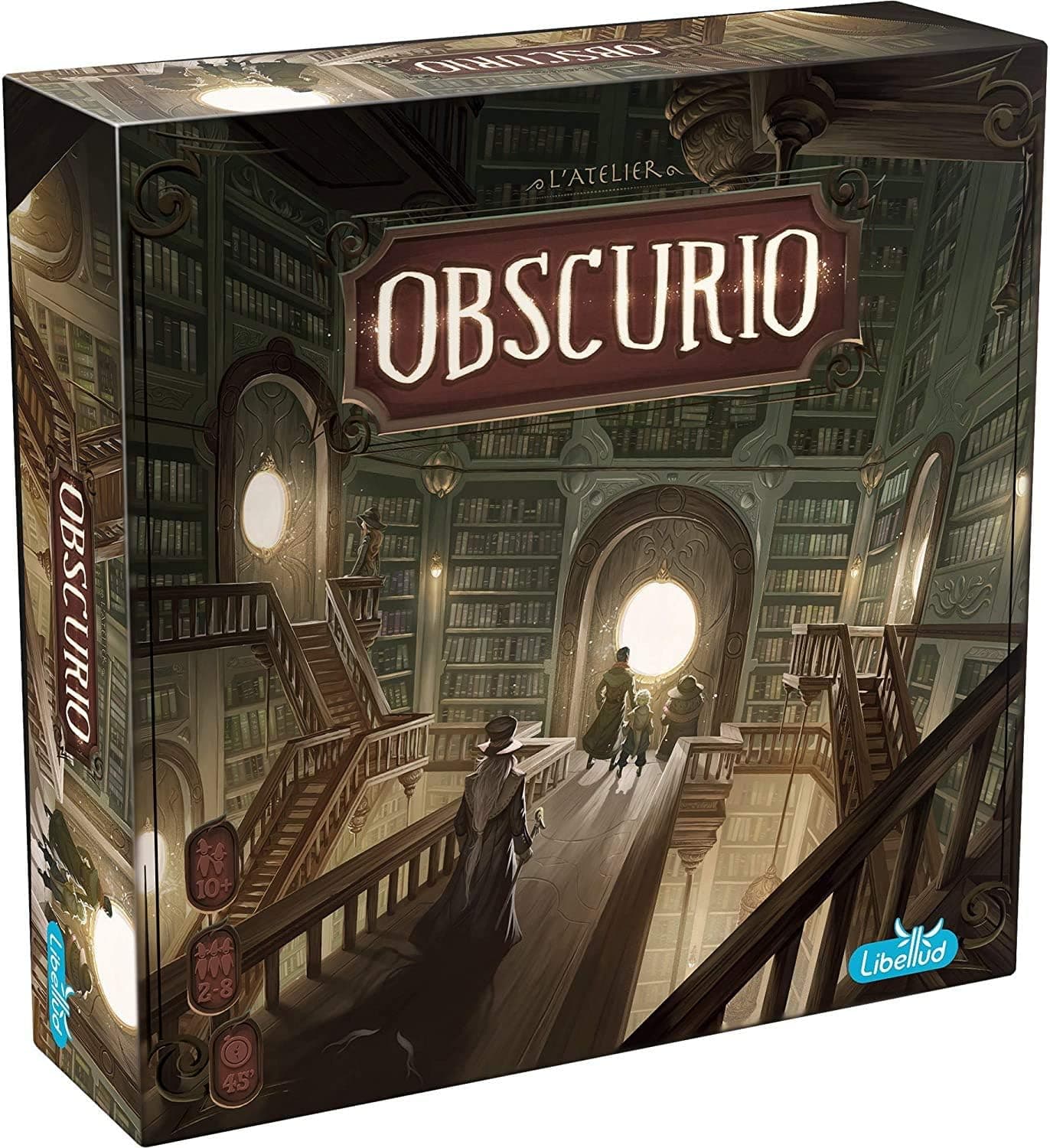
What is it? Obscurio is a cooperative with traitor where one of you is the Wizard who must guide others (Wizard apprentices) through a magic library before it's too late. Each round, the Wizard sees a secret target card and must make others identify it among 6 options using only an illustration on a magic tablet. The trick: one of you is a traitor trying to subtly sabotage.
Why is it creatively fascinating? Because it combines visual guessing + social deduction + time pressure. As Wizard, you receive abstract/dreamlike illustrations (Dixit style but more varied) and must choose one evoking the target card. Does the target card show an old clock and you choose an illustration with time sands? Or with gears? Or with an old man looking at the past? Each choice is creative.
What's special is the hidden traitor element. Someone at the table is trying to make you fail, but must do it subtly without revealing their identity. As honest player, when someone votes for a wrong card, you wonder: "is it the traitor or genuinely didn't understand the clue?" This social deduction layer adds delicious paranoia.
The "magic tablet" illustrations (which is actually a cardboard frame with paper pads) are beautiful: surrealistic, dreamlike, with multiple possible interpretations. And each round the Wizard can add tokens on top of the illustration to highlight specific areas, adding another non-verbal communication layer.
The game has narrative progression: you advance through library rooms (dark forest, mirror hall, crypt, laboratory...), each with its own aesthetics and increasing difficulty. This creates a feeling of epic journey where each victory brings you closer to escaping and each failure closer to being trapped.
A brilliant aspect: the cohesion system. You have a marker that goes up when you succeed and down when you fail. If it reaches zero, you lose immediately. But you can also strategically spend it to get advantages (more time, eliminate wrong cards, etc.). This tactical management of an emotional resource (group cohesion) is thematically perfect.
For whom: Groups of 2-8 players (although with 5-7 shines more). From 10-11 years. It's perfect for groups who enjoyed Dixit and want something similar but with more structure, clear objectives and a touch of social deduction. Also great for Halloween or magical themes.
Duration: 40-60 minutes | Players: 2-8 (ideal 5-7)
7. Imagine
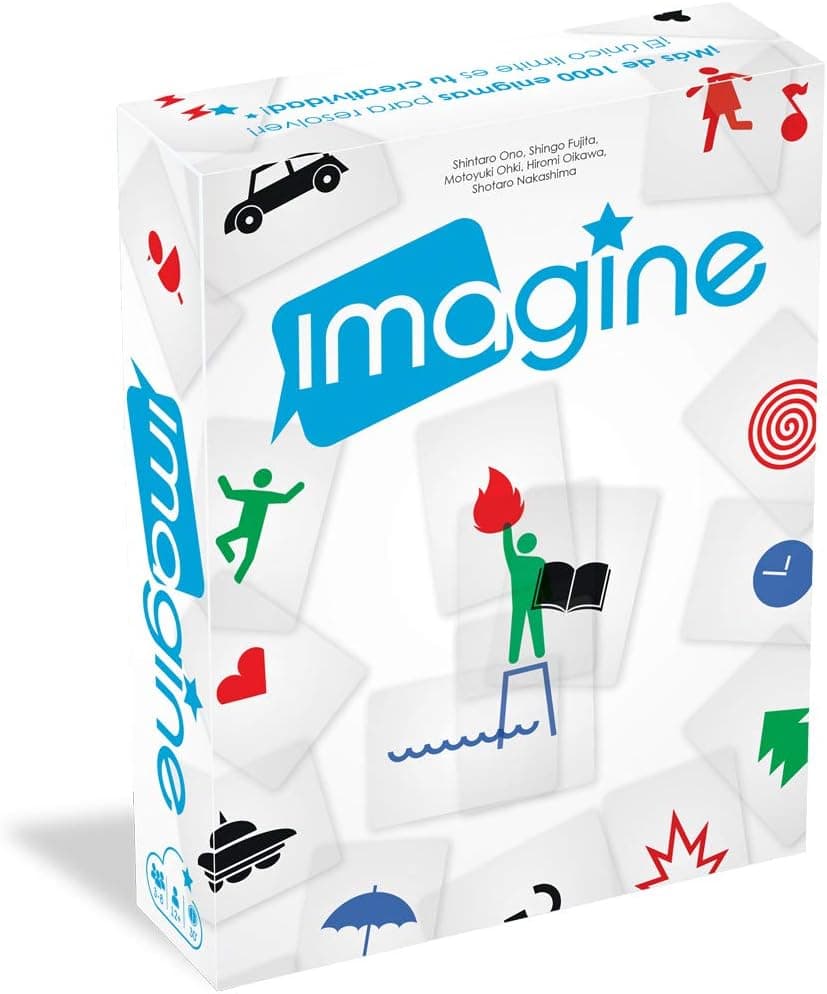
What is it? Imagine is pure guessing using only transparent cards with simple icons you can overlay, rotate, distance or combine to represent words, phrases, movie titles, objects... anything. Cards have basic elements: shapes, colors, symbols, numbers, stylized letters, simple objects. Your visual creativity is the limit.
Why is it brilliantly creative? Because card transparency allows infinite combinations. Red circle card + ears card = Mickey Mouse. "Person" card on top of "square" card = person in a box = prisoner. "Eye" card + "!" card flipped = exclamation mark = surprise. You're constantly looking for visual ways to transmit abstract concepts.
The visual language you use is universal but personal. There are no words (literally, you play in complete silence while making your representations), only pure iconography. This makes it perfect for multilingual groups or children still developing vocabulary. Communication is pre-verbal, primitive, direct to visual brain.
Most fascinating is seeing how different people represent the same concept. For "Frozen" (the movie), someone could use snow card + crown card = ice queen. Another: two people card + heart card + snow card. Another: snowman card + smiley face = Olaf. All valid, all creative, all revealing different mental connections.
Cards are physically beautiful: transparencies with clean and colorful illustrations that look gorgeous when overlaid. And the act of manipulating them, rotating, separating is very tactile and satisfying. There's something almost zen in searching for the perfect card, placing it, adjusting position...
The game works competitively (with points) or cooperatively (simply enjoying representations). Personally, best sessions are cooperative ones where everyone contributes ideas on how to represent each concept and you celebrate together especially ingenious representations.
For whom: Groups of 3-8 players (ideal 4-6). From 8 years (even younger with help because it's purely visual). Perfect for groups with very varied ages, educational contexts (teaching concepts visually), or simply as relaxed and contemplative game. Also great to take traveling because it's very compact.
Duration: 20-30 minutes | Players: 3-8 (ideal 4-6)
8. Detective Club
What is it? Detective Club is social deduction with visual creativity. Each player is a detective in an exclusive club. The leader chooses a secret word and whispers it to everyone except one (the Conspirator), who doesn't know the word. Everyone, simultaneously, plays two cards from their hand with illustrations somehow related to the secret word. Then you must discover who's the Conspirator analyzing which cards each one played.
Why does it work so well? Because of the Conspirator's dilemma: you don't know the word but must play cards that seem related to... something you don't know. You have to guess what word it is based on cards others are choosing (which you see face down while everyone selects), then play sufficiently ambiguous cards that could fit multiple words. It's a fascinating mental exercise.
For honest detectives, the challenge is playing cards that clearly relate to the word but in creative ways. If the word is "party", you could play a fireworks card (obvious), or with people dancing (obvious), or... with a card showing organized chaos, or bright colors, or an image that reminded you of your last party. Creative but defensible connections are key.
The discussion phase is pure gold. Each detective must explain why they chose those specific cards for the secret word. "I played this forest card because the word is 'nature', right?" "I played the black cat because obviously it's 'mystery'..." And the Conspirator must improvise plausible justifications for their random cards. Best games have brilliant defenses where the Conspirator almost convinces everyone.
Card illustrations are Dixit-style surrealistic, with multiple possible interpretations. The same card can evoke dozens of different words depending on which aspect you focus on (dominant color, main object, transmitted emotion, composition...). This ambiguity is essential for gameplay.
The scoring system balances both roles: detectives score if they identify the Conspirator, Conspirator scores if they go unnoticed. And there are bonuses if detectives correctly identify why other detectives played specific cards. This incentivizes both creativity and psychological analysis.
For whom: Groups of 4-8 players (ideal 5-6). From 10-11 years who can handle bluffing and justifications. It's perfect for groups who enjoyed Dixit and want to add a social deduction element, or for social deduction fans (Werewolf, Avalon) who want something with more creativity and less aggressive accusations.
Duration: 30-45 minutes | Players: 4-8 (ideal 5-6)
%2Fpic4783811.jpg&w=3840&q=75)
How to Choose the Perfect Game According to Your Needs
With 8 different creative games, the natural question is: where to start? Here's a practical guide.
According to Your Experience with Creative Games
Never played anything like this: Start with Dixit or Just One. They're the most accessible, with rules explained in 3-5 minutes, and work with any group. Dixit especially is the perfect gateway to creative games world.
Already know Dixit, want more depth: Try Detective Club (adds social deduction), Obscurio (adds cooperation and traitor), or Wingspan (adds resource management and strategy).
Looking for something unique and experimental: The Mind is your option. There's nothing like that telepathic synchronization experience.
Want something ultra-portable: Imagine, Just One or The Mind. All fit in a small purse and are perfect to take traveling, to bars, or to any gathering.
According to Type of Creativity You Like
Narrative and verbal (storytelling, giving clues with words): Dixit, Just One, Detective Club.
Visual and spatial (communicating with images, icons, compositions): Imagine, Concept, Obscurio.
Intuitive and emotional (reading others, synchronizing): The Mind, Obscurio.
Strategic and thematic (building emergent narratives): Wingspan.
According to Atmosphere You Seek
Relaxed and contemplative: Wingspan, Dixit, Imagine. These are games where you can take your time, there's no brutal pressure, and atmosphere is more zen.
Tense but cooperative: The Mind, Just One, Obscurio. You work together against the system (or against the traitor), with growing tension but no conflict among you.
Competitive but friendly: Detective Club, Concept (in competitive mode), Dixit. There are winners and losers but laughs and shared moments matter more than scoring.
According to Group Size
2-4 people (small groups or couples): Wingspan works fantastically with 2. The Mind too. Dixit works but shines more with 5-6.
5-6 people (ideal group for most): This is where almost all shine: Dixit, Just One, Detective Club, Obscurio, Concept, Imagine.
7-8+ people (large groups): Concept and Obscurio scale well to large groups. Dixit works up to 8 (you'll need expansions for more cards). Just One works up to 7.
According to Ages in Group
8-10 year old children included: Dixit, Imagine, Concept. These have strong visual components children intuitively understand.
Teenagers and young adults: Detective Club, Obscurio, The Mind. These require a bit more maturity for bluffing or synchronization.
Multigenerational groups (grandparents included): Dixit is the undisputed king. Beautiful illustrations attract older people, simple rules don't overwhelm, and varied cultural references make each generation contribute something.
Only adults: Wingspan if you seek more strategic weight, or any of the others if you prioritize social interaction.
Frequently Asked Questions
Do I need to be creative or artistic to enjoy these games?
No. None require you to know how to draw, write well, or have artistic training. These games' "creativity" is mental: making unexpected connections, thinking laterally, communicating in unconventional ways. If you've ever made an analogy, told a joke, or explained something complex simply, you have all necessary creativity.
Are these games expensive?
Very reasonable:
- The Mind, Imagine: €10-15 (cheap)
- Just One, Concept: €20-25 (mid-range)
- Dixit, Detective Club, Obscurio: €25-35 (mid-high range)
- Wingspan: €50-60 (most expensive, but justified by high quality components)
Compared to other entertainment forms (cinema, dinners out, etc.), hours-of-fun per euro ratio is excellent.
If I can only buy one, which do I choose?
For maximum versatility: Dixit. Works with any age from 8 to 99, with groups of 3-8, in family or friend contexts, competitively or relaxedly. It's the safest.
For best price-fun ratio: Just One (€20) or The Mind (€10). Both offer unique experiences at very accessible prices.
For most complete and deep experience: Wingspan. If you want something with more strategic weight that's also beautiful and thematically rich.
Where can I buy them?
- Specialized stores: Zacatrus, Más Que Oca, Jugamos Todos, Dungeon Marvels, or your local store
- Amazon: Usually have them all available
- FNAC, El Corte Inglés: Most popular ones (Dixit, Wingspan, Just One)
- Second hand: Wallapop, although these games hold their value well
Note: This article contains affiliate links. If you purchase through these links, we could receive a small commission at no additional cost to you.
Do you like my content?
Buy me a coffee to support my work